Dragonflies, Dragons, and Her Mother’s Death

by Thomas Davis

She looked at all the red-eyed dragonflies
That hovered on the water of the pond.
Inside the small stone house, just ten years old,
But feeling like she’d lived at least two lifetimes,
She wondered how the dragonflies perceived
Her hugeness when she walked out to the pond
And stared at them, their gauze-like wings and bodies
As red as eyes that bugged out at the day.

Above her on the mountain peaks, in caves
That joined to caves through tunnels dug by dragons,
As large compared to her as she was when
She stood above the darting dragonflies,
The daily noise of dragonkind was echoing
Down rocky slopes, off cliffs too high for humans.

She wondered, looking at the dragonflies,
What she would feel if, suddenly, she grew
A dragon’s leathery wings and felt the power
The dragons felt when spewing streams of fire.

She did not look behind her where her mother
Was stiff in death, her aging face now smoothed
Of wrinkles wrought by weeks of endless pain
As life ebbed from her as she fought to keep
Herself alive so that her only daughter
Would not be left alone upon the mountain.

At last the young girl sighed. She had her chores:
She had to dig a shallow grave and find
Round stones to place upon her mother’s body.
She’d cried all day until the storm had left,
And now, inside a weariness that seemed
As heavy as the stones she’d have to find,
She had to face what was and nurse her courage.
She thought, this mountain’s home. I’m staying here.

Above the house a golden dragon drove
Its heavy wings through heavy summer air.
A rumbling echoed off the rocks and cliffs
That soared forever up into the sky.

The villagers, who lived a dozen miles away
Inside a wall of circled black, round stones,
Were terrified each time a dragon passed
Above their heads, its wing beats making thunder,
But she had always lived below the caves
And heard their moving, eating, talking noises
As they lived life the way her mother, she
Lived life, joy bubbling out of mountain stones.

Her mother would not weigh too much. Not now.
The stones she found would be much heavier.
She turned away from dragonflies and, careful
To keep her eyes away from where her mother
Looked up toward the dark stone ceiling’s thatch,
Went through the doorway’s arch outside. The chill
That night would bring was still two hours away.

She’d manage living on the mountainside,
She told herself. She’d learned her mother’s skills
At gardening and hunting game too small
For dragon’s bellies or their long, black claws.
She had a woman’s heart in spite of being young.
She went down to the shed she’d used for play
And got their spading shovel off the wall.

What should she do? She asked herself. The stones
Or digging first? She left the shed’s cold dimness
And walked down to a mound above the pool.
She wasn’t weak, she thought. She forced the blade
Into the rich, dark, mountain earth and watched
A worm slide out of sight into the ground.
She fought the tiredness in her spirit, lifted
The soil from the tiny indentation
And dug again, the rhythm of the work
A balm to memory, the single gasp
She’d heard her mother make as all her breath
Exhaled into a world she’d left unwillingly.

Night came too soon. Above her head a dragon
Flew overhead and circled, watching her.
She didn’t look at it, but kept on digging.
A moon as large as dragon fire rose red
Above the jagged peaks around the cottage.

She’d have to gather stones tomorrow morning,
She told herself. She looked back at the cottage.
In mountain air she couldn’t sleep outside,
Away from where her mother’s eyes stared sightlessly.

Do what you have to do, she told herself.
You’ll live through this. Do what you have to do.

Note: This is the beginning of a poem too long to publish on wordpress. The story was inspired by John Keats’ tale in his narrative poem, Lamia, although this poem uses blank verse rather than the rhyming couplets Keats used. To go to the next section of the epic, click on 2.

Ben Naga asked me to do an audio of the poems I have not yet put in place. I’m not sure that that is important this late in publishing the epic, but this is the audio for the first installment of the dragon epic: Dragonflies, Dragons, and Her Mother’s Death.

16 Comments

Filed under Poetry, The Dragon Epic, Thomas Davis

Ancestor

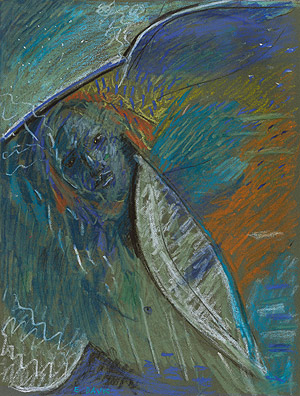
pastel by Ethel Mortenson Davis

Image

12 Comments

Filed under Art, Art by Ethel Mortenson Davis, Ethel Mortenson Davis

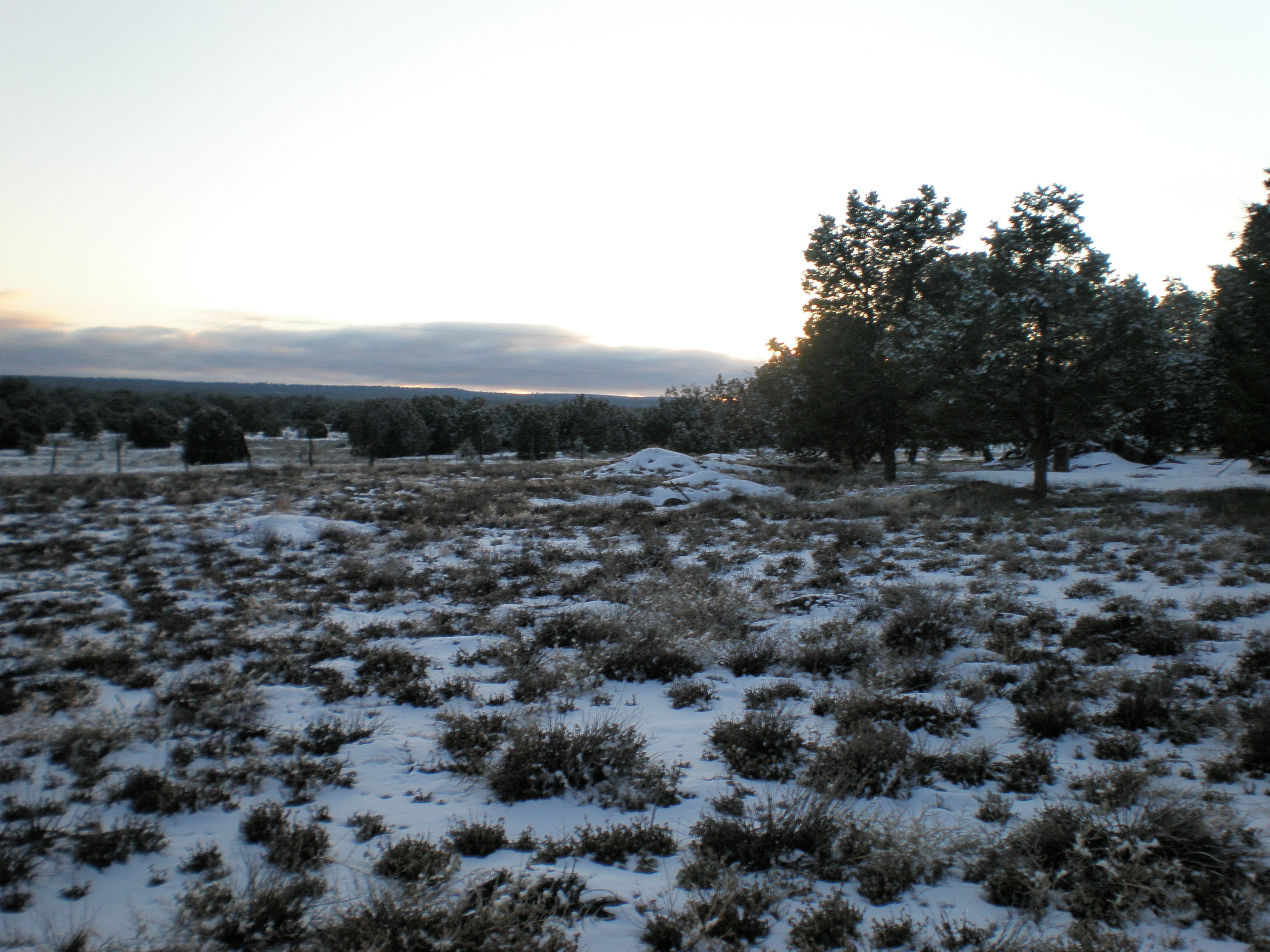
Evening in Continental Divide, NM

We have, over the life of fourwindowspress.com, presented poetry and essays about Continental Divide, New Mexico. It is a small place off Interstate 40 to the east of Gallup. The area has a variety of races and tribes, Navajo, Pueblo (especially Zuni and Acoma), Hispanics, people from the Middle East, and Anglos. The majority of the population are Native Americans. This photograph by Ethel Mortenson Davis is taken just on the other side of the fence around our house looking southwest–more west than south, at sunset. You can see the Zuni Mountains behind the rabbit brush, sagebrush, juniper, cedar, and piñon trees. There are about 360,000 acres of pristine wilderness in the Zuni Mountains. What you cannot see in the photograph are the elk, mule deer, jack rabbits, rattlesnakes, mountain lions, bobcats, lynx, black bears, grizzly bears, cattle, horses, coyotes, and dogs that sometimes make noises in the night that get our two wonderful dogs, Pax and Juneau, barking. This is only one angle from our house. The forest is thicker if you swing the camera lens just a little bit. From our second story you can see the red cliffs to the north and Mount Taylor, the area’s towering mountain rich in Navajo and Pueblo beliefs, to the east. We live in a wild, rural place that presents some challenges–we are sometimes without electricity or water for a day, but that also causes tourists to stop and get out their cameras.

Photograph by Ethel Mortenson Davis

11 Comments

Filed under Essays, Ethel Mortenson Davis, Photography

Life

a photograph by Sonja Bingen

4 Comments

Filed under Art, Photography

The Source

by Ethel Mortenson Davis

I am going deep within myself,
to where gates no longer open,
but instead
walls are crossed upon walls
between the four directions.
Here is where the wolf
cannot penetrate again,
and the lion cannot eat my flesh.

Like some wounded animal
that crawls back to his source,
I am going deep within myself
to find the cool stillness.
I will not come out again
until my skin has thickened.

25 Comments

Filed under Ethel Mortenson Davis, Poetry

Sonnet 34

by Thomas Davis

We talked about the birthday cake he’d had
for over twenty years. He couldn’t eat,
but said, I’d eat a bite right now. His mother, glad
to feed his memories, got to her feet
and drove to Rhinebeck for the right supplies,
the afternoon familiar as she whipped and stirred
an angel food and let it slowly rise
into an arabesque of whipped cream whirred
with Marciano cherries, chocolate,
and mother’s love as old as he was on that day.
She brought the cake out with a coffee pot
and beamed to see a smile and sense of play

that fought, a moment, pain and hours of dread
he braved while in the prison of his bed.

Note:Kevin and Tamar’s apartment, where we spent two weeks under Hospice care, is located in Rhinesbeck, NY.

19 Comments

Filed under Poetry, Thomas Davis

Leo

a photograph by Alazanto, Kevin Davis, our son

Note: Leo was one of the most wonderful parts of Kevin’s life. He rescued Leo as a wild kitten from underneath his car on a cold morning in Poughkeepsie, New York. When Kevin was extremely ill Leo came to the hospital, and even though Kevin could no longer walk, he slipped out of his wheelchair and got on the floor where Leo immediately snuggled up to him. This photo was taken November 4, 2007.

20 Comments

Filed under Art, Photography

John Hope Franklin

by Ethel Mortenson Davis

John Hope Franklin
remembers
he and his mother
boarding a train
and getting on a white coach
by accident.

“They stopped the train
and threw us off.”

He was six years old,
crying and afraid,
but his mother told him
that he was as good
as anyone else
in the whole world,
and that he shouldn’t
waste his energy crying,
but instead use it
to prove his worth.

John Hope went on
to get a PhD from Harvard,
rewriting American-African history.

In 1934 he handed
Franklin Roosevelt a petition
against the Cordie Cheek lynching,
marched for civil rights
in Montgomery Alabama in 1965,
testified against Robert Bork’s
nomination to the Supreme Court in 1987,
and won the Medal of Freedom in 1995.

He recently said,
“when I reached 80 years old
I thought it would change,
but instead I’m insulted every day
of my life.”

Copyright © 2010, I Sleep Between the Moons of New Mexico

Notes: A “quiet lynching” is how Sheriff Claude Godwin described the hanging of Cord Cheek, a twenty-year-old African American. Cheek was accused of, but never indicted for, attacking an eleven-year-old white girl. When the Maury County,Tennessee grand jury refused to indict Cheek for the alleged attack, residents took matters in their own hands in 1933. Franklin’s testimony during the confirmation of conservative Robert Bork to the Supreme Court in 1987 helped lead to Bork’s failure to gain confirmation by the United States Senate.

14 Comments

Filed under Ethel Mortenson Davis, Poetry

A Poet’s Age

by Thomas Davis

He walked into the dark, high, empty room
And moved into the labyrinth of racks
Until, at last, the winter cold so sharp
His breath flowed white then disappeared in air,
He reached the shelf beside the ancient tomb
Of some forgotten king, the zodiac
Portrayed above a dimly painted harp,
And took a book in hand with tender care.

The darkness seemed to dance with wisps of light
As, walking through the stacks, he seemed to grow
As shadows leapt before him on the floor.
He seemed a shadow, like reflections deep
In Plato’s cave where shadows thought that night
Is all there is—that what their minds could know
Was real and true in spite of how the door
Of waking opened only in their sleep.

He left the racks and put the massive book
Upon a marble table, struck a match
And lit a candle placed beside a jar of ink
And took an old black pen and set the quill
Upon rich velum, in his eyes a blazing look
Of fire, as if his mind could swiftly snatch
His blood and flesh and make his true self shrink
To strong, honed words shaped by his flawless skill.

For thirty years his pen had moved his hand
And bled his life into the book, each day
His writing draining life from who he was
Into the words that crawled from page to page
As pages seemed to magically expand
Each time he walked through stacks and made his way
To sit down at the table as the buzz
Of life wrote songs that made his spirit age.

As words flowed from his pen, his hair grew white,
And in his heart the burdens placed by years
Wrapped tight against the beating of the drum
That let him be the poet that he wished to be.
The pages glowed and danced as if the plight
Of humans and their lives were only fears
That scattered when the words began to strum
Their shining lives into eternity.

His hands began to shake. His wrinkles spread
Across his face and hands. He felt so old
The thought of living yet another day
Seemed heavier than what his heart could bear.
He sighed inside the darkness, closed the dread
That emanated from the words that told
The story of the love that rises fey
Into the human self, our spirit’s prayer—

And as the book’s dark cover slowly closed,
The book’s soft light lit up the poet’s flesh,
Long years fled from his pain-filled, reddened eyes
And, in a moment, time reversed its flow.
He got up, made himself calm, strong, composed,
Walked to a rope, pulled, let the daylight’s fresh,
Sweet light spill from the winter’s cold blue skies
Into the darkness, on the book’s soft glow,

Then turned and took the book into his hands
And walked through racks so filled with endless books
They seemed to never end, the evidence
Humanity still lives, thinks, feels, and sings.
Around him whispered time’s ephemeral sands;
He reached the last, cold shelf and heard the rooks
Of spring alive in ancient forests dense
With life before there were lost graves for kings.

Note: This poem follows the conventions of an octave, but expands that convention to eight stanzas.

20 Comments

Filed under Poetry, Thomas Davis

Song of Ecstasy

a pastel and poem by Ethel Mortenson Davis

Song of Ecstasy

She is the sort that hears the song
the hills make after a heavy rain—
a humming sound one hears
first through the finger tips,
then the ears.

She’s the sort that dances with antelope at dusk,
playing in the field until dawn.

She’s the sort that makes the insect song—
not bell, nor click, but a rhythm in-between:

like the sound the silver pieces
sewn on her dress and leggings make,
a sound like wind and bell
as she makes her grand entry
in a circle around the village—

head held high,
her hair flowing behind her—

tasting the song of pure ecstasy
like honey on the tongue.

21 Comments

Filed under Art, Ethel Mortenson Davis, Photography, Poetry