The Winter Nights Are Best

by Ethel Mortenson Davis

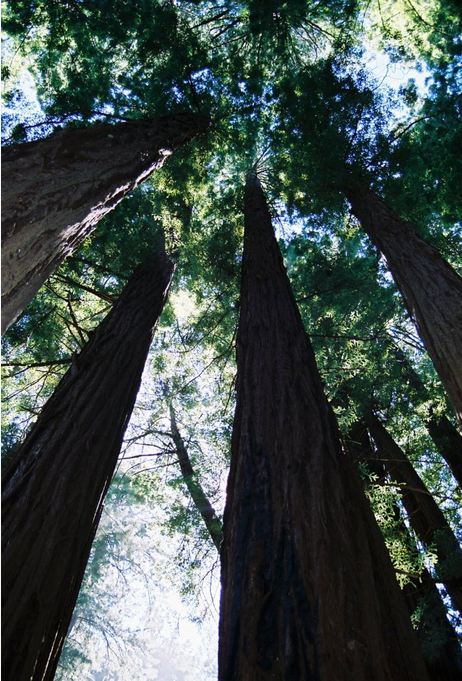
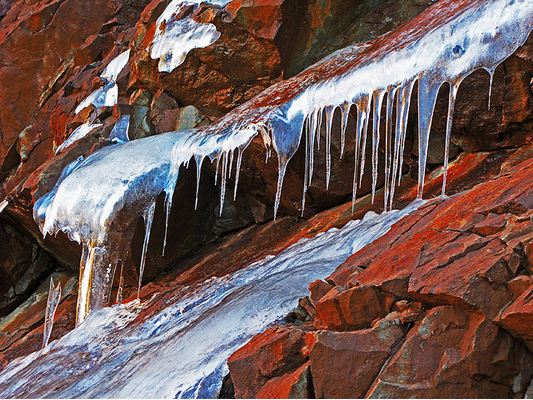
The winter nights are best:
Her floors are swept
back and forth
and back again
with heaps of snow.
Her wind howls
like timber wolves
in some cold, inhuman land.

She’s almost thought
to be, in her heart, a beast,

But her snow
drifts too deep;
her wind blows too strong,

and weakness flees
the human heart again.

18 Comments

Filed under Ethel Mortenson Davis, Poetry

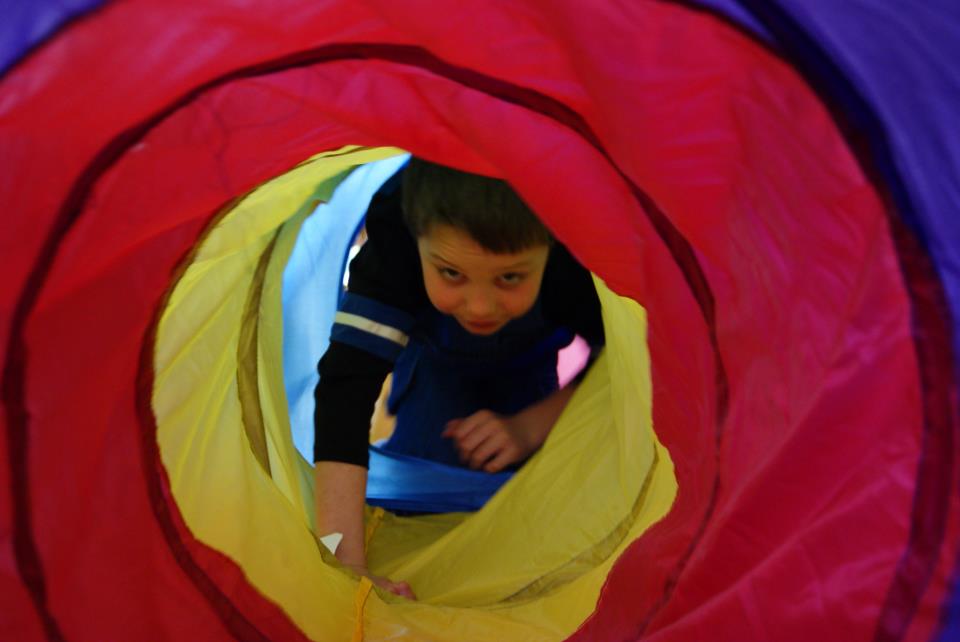
Into the World

a photograph by Sonja Bingen

Our youngest grandson, Joey, is autistic. His mother, Sonja, and father, Bill, have patience, grace, and courage in abundance. As a result Joey has discovered fun.

14 Comments

Filed under Art, Photography

The Black Snake

by Ethel Mortenson Davis

In the center
of our galaxy
the Milky Way,
a great black snake lives
and mesmerizes stars
so they will
get close enough
for her to swallow—
while, at the same time,
she gives birth
to new stars.
They come out of her
and go flying off
into the cosmos
as far as they can go
to escape
her clutches.

Copyright © 2011, White Ermine Across Her Shoulders

25 Comments

Filed under Ethel Mortenson Davis, Poetry

3. The Coming of the Weirding Times

by Thomas Davis

Ruarther stopped upon a ridge, the sound
Of dragon wings behind him rising up
Into the sky, his breath so short from running
He had to kneel and gasp, too trembling
To see the golden dragon fly away.
He’d been afraid, he thought. His mouth was dry
And stomach clenched against the memory.

He failed to force himself to move for minutes
That crawled like hours as he tried to see
Why he had turned and run when flame had sprouted
Out of the female dragon’s gut into the tree.
He’d always thought that he was strong enough
To face a dragon, look it in its eyes,
And force the beast to fear his human strength.

At last he got up off his knees and looked
At skies and snow clouds massing in the mountains.
He’d been away for weeks, the game so scarce
He hadn’t even used his bow, not once.
The village needed meat. Winds gathered
And soon they’d cover mountains deep in snow,
And then the herds of deer would head downhill
And hunting would become a test of stamina
So difficult that only full-grown men
Could hope to bring home meat enough to feed
The children, women, and the older men.

The dire wolves, black with yellow, shining eyes
Would find the village too, their hunger bright
Inside their growls and nightly moonlit howls.
The harshness of the winter world would batter
The villagers and make them long for spring.

Ruarther stopped his musing, turned toward
The village, started running with a long, sure stride.
Ruanne, the girl who thought he was a fool,
Would laugh to hear he’d run from dragon fire,
Confirming what she thought of him already.
He wondered at the dragon’s curious words,
The plea to save the witching girl, the meaning
Of dragons taking interest in a human’s life.
He couldn’t let Ruanne hear of his fear,
He thought. Her yellow hair and dark green eyes
Ran with him as he jogged past tree trunks massive
Inside the forest’s twilit canopy.

As night grew out of shadows on the ground,
He stopped and built a fire. The winter cold
Walked like a forest beast whose hunger burned.
He took his blankets from his leather bag,
Edged close to where the flames danced merrily
And closed his eyes, sleep letting him forget
The dragon, witch’s girl, his fear, his dread.

Before the sun had risen over mountains
He woke. He smelled a bear. He grabbed his bow.
The world was silent. No bird song, no breeze. . .
And then he saw the bear so huge it seemed
As if it was the spawn of dragons, brown
And shaggy in the darkness, dangerous,
Eyes glowing in the moon’s dim silver light.
Its eyes looked straight into Ruarther’s eyes.
A weirding chill iced deep inside his head.

The great bear stood on hind legs eight feet tall.
It made no sound, but stared and stared at him.

And then, inside his head, a rumbling voice
Said, “Humans should beware of dragon’s minds.”
He touched his ears; he had not heard a sound,
And bears did not have speech like dragons did.

He looked around. Light crept through trees.
He thought he heard the warning of a growl,
But when he looked back at the bear, the bear
Was gone, and birds were singing to the sun.
He sensed the snow clouds not yet in the sky.

The witch’s child! He thought. The dragon, then
The bear! Strange happenings that had a pattern
As if Old Broar had cast his bones and seen
The future through his cloudy, pale blue eyes.
It had to be the witch’s child aligning
The universe against the village peace.

A smallish doe walked through the trunks of trees
Not fifteen yards away. Without a thought
He notched an arrow, let it fly at her.
She startled, leaped, crashed dead into the ground.
He’d hunted for a week, and now he’d found
His prey and felled it with a single pull.
Rejoicing started flooding through his thoughts. . .
But then, he thought he smelled the bear’s rank smell,
Felt fierceness in the coming winter storm.

He’d have to warn the villagers, he thought:
Old Broar, Ruanne, the village leader Reestor. . .
He’d have to run through several long, hard days.
Strange times were on them, weirding times.

Note: This is the third section of a long poem I am skeptical about publishing in wordpress format. The story was inspired by John Keats’ tale in his narrative poem, “Lamia,” although this poem uses blank verse rather than the rhyming couplets Keats used. Click on the numbers to read earlier sections: 1, 2, 4.

18 Comments

Filed under Poetry, The Dragon Epic, Thomas Davis

Scaffolding

A Photograph by Alazanto, Kevin Davis, our son

Design is a force that gives our lives meaning. Design is integral to communication–that which binds us together as one.

November 15, 2009.

13 Comments

Filed under Art, Photography

The Engineer

by Ethel Mortenson Davis

In winter
a boy or girl could ice skate
up the branch
of Little Sandy Creek
as far as their strength could hold out
before the heavy snows of January
spoiled the ice.

It was here
they would dream
about who they would become,
about what they would do
with their lives
when they grew up—
before the willows
became too thick and
turned them back,

or when the shallow spots,
under the bridges,
with stones
would stop them.

Charlie could skate for miles
before he went home
to put steaming copper kettles
of water on his stove
to bend slats of wood
to make skis with curled ends

before the heavy snows of January and February
swept across us.

13 Comments

Filed under Ethel Mortenson Davis, Poetry

Deer in The Forest

Photograph by Sonja Bingen, our daughter

14 Comments

Filed under Art, Photography

2. The Old One

by Thomas Davis

The old one, fierce inside her double hearts,
Kept flying high above the human child
As snow whipped down from caves and jagged peaks
Into the plateau where the cottage stood.

She’d sensed the mother’s death and saw the girl
Construct a grave of heavy, rounded stones
And watched her as she harvested the garden,
Trapped rabbits, drying pelts outside the shed,
And fished in waters tumbling down the mountainsides.

At night, inside her cave where hot springs bubbled
From rocky walls, the old one’s dreams were filled
With how the human child looked as she faced
Her lonely life with only dragons flying
Above her to and from the caves set deep
In slopes so steep the mountain goats avoided them.
The dreams were like a fever, always there—
The human child so slight compared to dragons,
But real beyond what any child could be,
Her face emaciated, body starved.

Each day she flew above the cottage roof
She saw the child had made a fire and managed
To get herself through yet another night
As cold raged like a dragon spewing fire.

The humans in the valley far below
The girl stayed in their village, hunting deer
And other game, including goats the dragons
Depended on when winter frosted dragon hides.
The old one kept imagining they’d leave
Their cottages and climb the mountainside
To fetch the girl into their small white houses,
But days passed, weeks passed, a month, and then more weeks
And no one seemed to think about the girl.

At last, her dreams more powerful than ever,
The old one swooped down on a hunter far
From where the village was, her mind on fire.
The man was bigger than most humans were.
He had an arrow notched and stared at her
As wings threw shadows on the snowy ground.

“I know enough to shoot into your eyes!”
He screamed while standing tense before her scales.

She snorted smoke and dug into her memory
For human words she’d learned to use against
A foolish knight who’d sought to find her lair
In days when gold and jewels made her feel
The blazing glory of her dragoness.
Her honeyed words back then had brought him close.
He’d felt the deadly heat of dragon flame.

“The plateau woman’s dead,” she said, her voice
As guttural as water rumbling down a cliff.
“Her child’s alone and needs your human help.”

The hunter’s eyes glared fear and hate at her.
He looked as if he didn’t know if he should flee
Or stay and fight a battle to the death.

“A child?” he asked, voice hard, fear in his breath.
He seemed to search his memory to see
If he could understand what made a dragon
Concerned about a girl, a human child.

“The child above your village in the cottage,”
The old one said. “The little, lonely girl.
She needs your help to get her through the winter.”

“A little girl?” the hunter asked. His eyes grew large
As understanding dawned. “You mean the witches’ child?
The one who lives below the dragon caves?”

The old one’s fires stirred deep inside her throat.
She rumbled even though she tried to still
Her double hearts to keep the hunter calm.

“What foolishness,” she said. “A witches’ child.
What does that mean? A human is a human.
She is a girl, a human girl, and humans
Should have enough humanity to care
About their children when they face starvation.”

The hunter, frightened, drew his bowstring back
And shot an arrow at her shining eyes.
She turned her head and let the arrow bounce.
She roared her rage and sent a spume of flame
Toward the foolish man and set his beard
To smoking as the tree behind him whooshed
Into a puff of angry, flaring flame.
The hunter turned and ran as if he’d seen
The end of time confront him in the woods.
The old one sat and looked at emptiness.

What was a human child to her? she asked.
She’d lived through generations of the villagers.
What was a human child to her? She spread
Her wings and lifted heavily to sky.
She flew above the cabin, saw the little girl,
An axe blade swinging at a chunk of wood.

You humans are a clutch of stupid fools,
The old one thought. She flew up to her cave
And hoped she’d sleep without her troubling dreams.

To listen to this section of the epic, click on The Old One.

Note: This is the second section of a long poem that I am skeptical about publishing in wordpress format. The first section was published in this format earlier as “Dragonflies, Dragons, and Her Mother’s Death.” The story was inspired by John Keats’ tale in his narrative poem, “Lamia,” although this poem uses blank verse rather than the rhyming couplets Keats used. Click on the number to go to an earlier or later section: 1, 3.

10 Comments

Filed under Poetry, The Dragon Epic, Thomas Davis

Spirit of the Horse

a photograph by Alazanto, Kevin Davis, our son

Taken October 29, 2006

13 Comments

Filed under Art, Photography

Habitat

by Ethel Mortenson Davis

The monsoons
sweeten the bounty
of the high desert meadows.
Curious blossoms
burst out everywhere.
Green grass
carried in the bellies of horses
finally becomes enough.

Perhaps the monsoons
will not return next year.
Our earth is not a permanent habitat.
One day our sun will explode
and melt our earth.
It will not care for us forever–

like my dog knows instinctively
when I leave her in the driveway.
Perhaps I will not return.
Perhaps that means
the end of her.

21 Comments

Filed under Ethel Mortenson Davis, Poetry