Category Archives: Essays

Sonnet 45

by Thomas Davis

I name them: Sophie, Phoebe, William, Joe,
each one of them as individual
as early mornings in New Mexico
when shining light holds trees and land in thrall.
Joe, lost in circles only he can see,
and William, king of Legos, friend of friends,
Sweet Phoebe, bright as any sun, a sea
of light that’s always looking past the bend,
and Sophie, fledgling eagle nearing flight—
like William, first born, disciplined, and kind.

We’ve lost our son, and in our grief the blight
of memories assaults our days and minds,

but in our hearts grandchildren laugh and sing
and help us think we’ll know another Spring.

This is the last sonnet in the sonnet sequence I have been posting for the last several months. Kevin’s life (February 16, 1982 – July 23, 2010) was shortened by an unknown cancer that we only knew about for a few short weeks in June and July of 2010. Ethel and I traveled to Poughkeesie, New York to be with him during his last several weeks and was there during days of excruciating pain and small triumphs that ended in deep grief. The sonnets were mostly written as our beloved son lay dying as day passed day, and time’s march brought us, finally, to his death. They were written as my way of trying to deal with an impossible, unbelievable, unacceptable time. The last sonnets in the sequence were written after Ethel and I had returned to New Mexico.

Ethel has written extensively about this time too. The last poem she posted on fourwindowspress, “In the Night,” was written in a cancer ward hospital room. Some of her poetry foresaw the nightmare to come; other poems were written during Kevin’s illness. A few were written in the year and a half since we came home.

I hesitated to put these sonnets out for the wordpress world to see. Should you publish anything so raw and filled with horror and grief? In the end I am grateful I went ahead and started posting them. I am incredibly busy as Dean of Instruction at Navajo Technical College, all of us have responsibilities to our families, and wordpress can devour time, so I seldom answer the many many comments put on our blog. I have this need to try to say something meaningful, and that takes time, and if I spent that time responding to comments I would have no time to read other poets. That would make my life poorer. But the truth is that comments placed with love beneath each sonnet has been deeply moving. They have helped Ethel and I keep on keeping on, and though some days you wonder why we humans keep doing that, the answer is contained in words and voices that connect us to one another.

When this sonnet was written in August of 2010, I could tell the impulse to write sonnets about the sequence of events and emotions accompanying Kevin’s illness and death was waning as the inexorable demands of living kept dragging me through my days. When I sat down one evening and wrote it, I knew this was the last of the sequence, the reason, in the face of all our tragedies, we keep walking this good earth. A human life is not forever. We see sunlight for a day and laugh without realizing the joy we are experiencing, and then cancer or some other illness enters our lives, and we face the boundary we cannot see past. At that moment we have so little left. Pride and dreams of the future that have ticked out the clock of our lives mean less than they did before. Yet, the voices of those who have loved us and whom we have loved sound deep inside our humanity and become life’s reason, the meaning for who we have been and who we are at this moment.

I have been battling bladder cancer since it revealed itself this winter. My prognosis is positive, unlike Kevin’s, but this is a sobering time. Not only have we been with our son as he died, but my own mortality is as raw in my face as his mortality was as he slipped into a coma from which he never awoke. At such moments you worry incessantly about the closest people to you. You also wonder if you have left any legacy at all. You want to make sure the lives you have so deeply cared for are going to experience laughter that denotes joy they do not realize they are experiencing. Have you done enough? Has your life been honorable through your days? And you think about your father, who is gone, and mother, who still goes at the word, go; the love of your life; your now gone son; your wonderful daughters, and your grandchildren cusped on making themselves who they will become.

And inside your worry the New Mexico sun shines with the high desert’s magic, God’s magic, blackbirds sing liquid songs, you wake in the morning with your wife of 44 glorious years beside you, you know that you will talk on the phone to your daughters before sunset, and you hear your grandchildren in your head dancing through their prom night or chasing a kite bobbing high in a springtime sky, and you know that life is more precious than you have known and that when it is all over, you will know, in those last moment, that you have been loved and have loved. What else matters? What else truly means at the end of a long, glorious day?

24 Comments

Filed under Essays, Poetry, Thomas Davis

Weather Upside Down, a photo essay

Snow came to Continental Divide yesterday and last night. Sometimes it was so thick you could not see the Zuni Mountains out the back window.

Ethel Mortenson Davis’s photograph of flowers blooming as snow fell

Up north in Wisconsin, where Sonja Bingen lives, spring is bursting with intensity.

Sonja Bingen’s photographs

Is the north becoming the south?

13 Comments

Filed under Art, Essays, Photography

Sonnet 41

by Thomas Davis

We kissed his forehead, yellow, cold, inert,
sobbed our goodbyes, left his body, drove
to Poet’s Walk above the Hudson, hurt
beyond expression, where, on hills, small groves
of ancient trees are interspersed with fields,
a place where, Kevin said, he liked to go.

And as cremation’s fires consumed, annealed
his spirit to our spirits, as the glow
of July’s sun warmed flesh too numb to feel,
we walked where he had walked and tried to find
our balance in a world turned sad, unreal—
our son was gone, his smile, his wondrous mind.

And as we walked the wings of butterflies,
black mourning cloaks, danced through the summer skies.

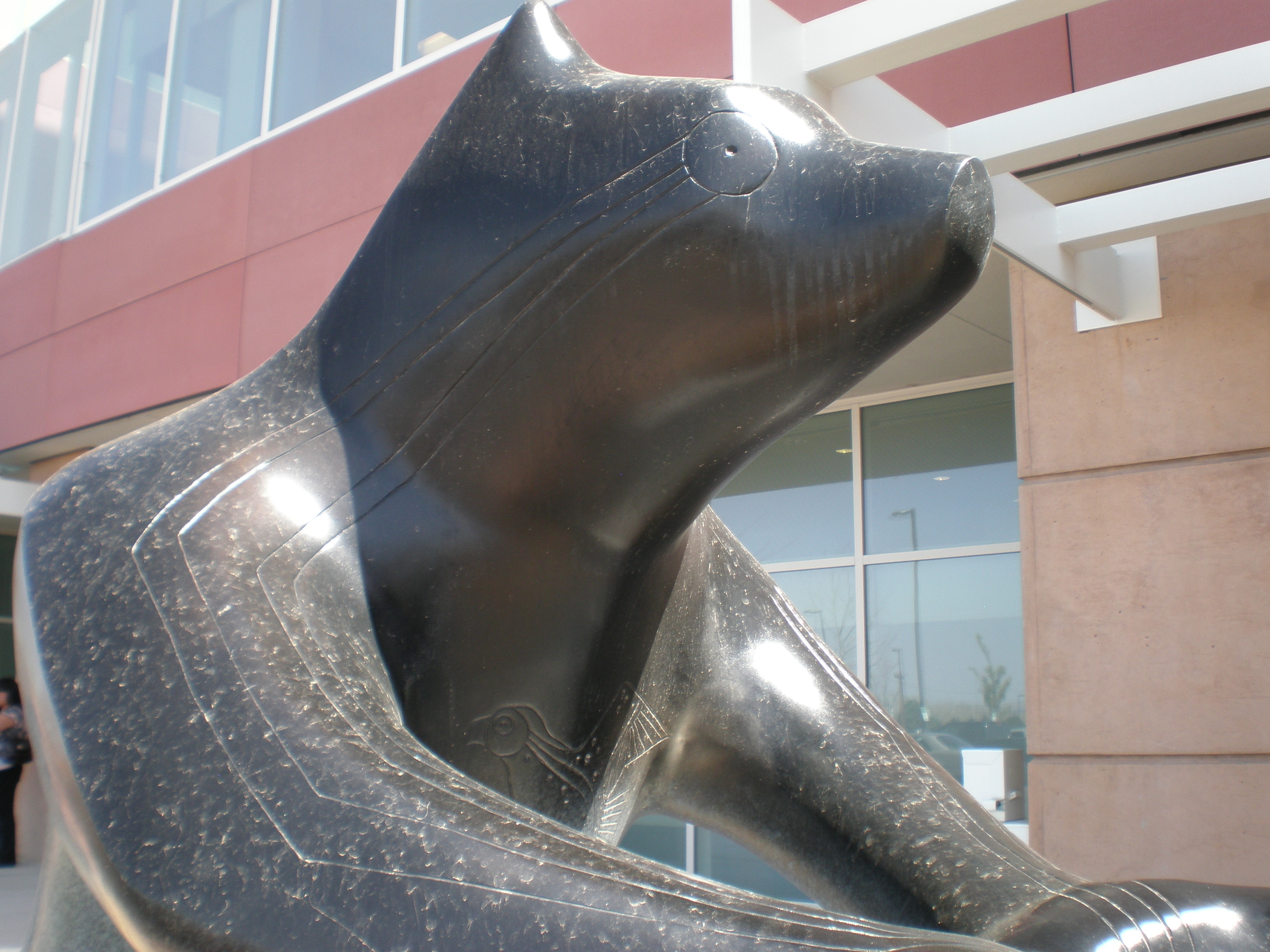
At the University of New Mexico Cancer Center in Albuquerque, where I am now being treated once a week, a healing bear greets patients as they enter the building. Marked with ancient symbols, shining black in the sun, Ethel and I stand before it every time we come to the Center. The major question in my mind at the moment, one that I cannot shake, is, why am I surviving my bout with bladder cancer while Kevin, only 28 years old, did not survive? I would have given him my life without a thought if he could still be present, thinking about butterflies that were such a constant, powerful symbol to him from the time he was a child to the day of his death when, as Ethel has written in a powerful poem not yet posted, a butterfly visited his hospital room so many stories up in the middle of the city. I understand there is no answer to such a question, and I am deeply grateful to have more years with Ethel, my children, and grandchildren, but both Ethel and I miss our son. This sonnet was written after our visit to Poet’s Walk Park on the Hudson River in New York. Ethel has also written about our experience there. After this moment we flew back home to New Mexico. Just over a year later we discovered my cancer. One of Ethel’s many photographs of the healing bear is below as a symbol of survival and strength in the face of devastating tribulation.

photograph by Ethel Mortenson Davis
31 Comments

Filed under Art, Essays, Ethel Mortenson Davis, Photography, Poetry, Thomas Davis

Evening in Continental Divide, NM

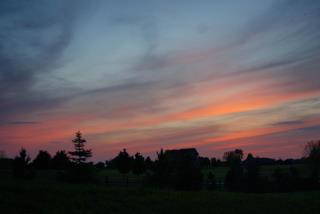
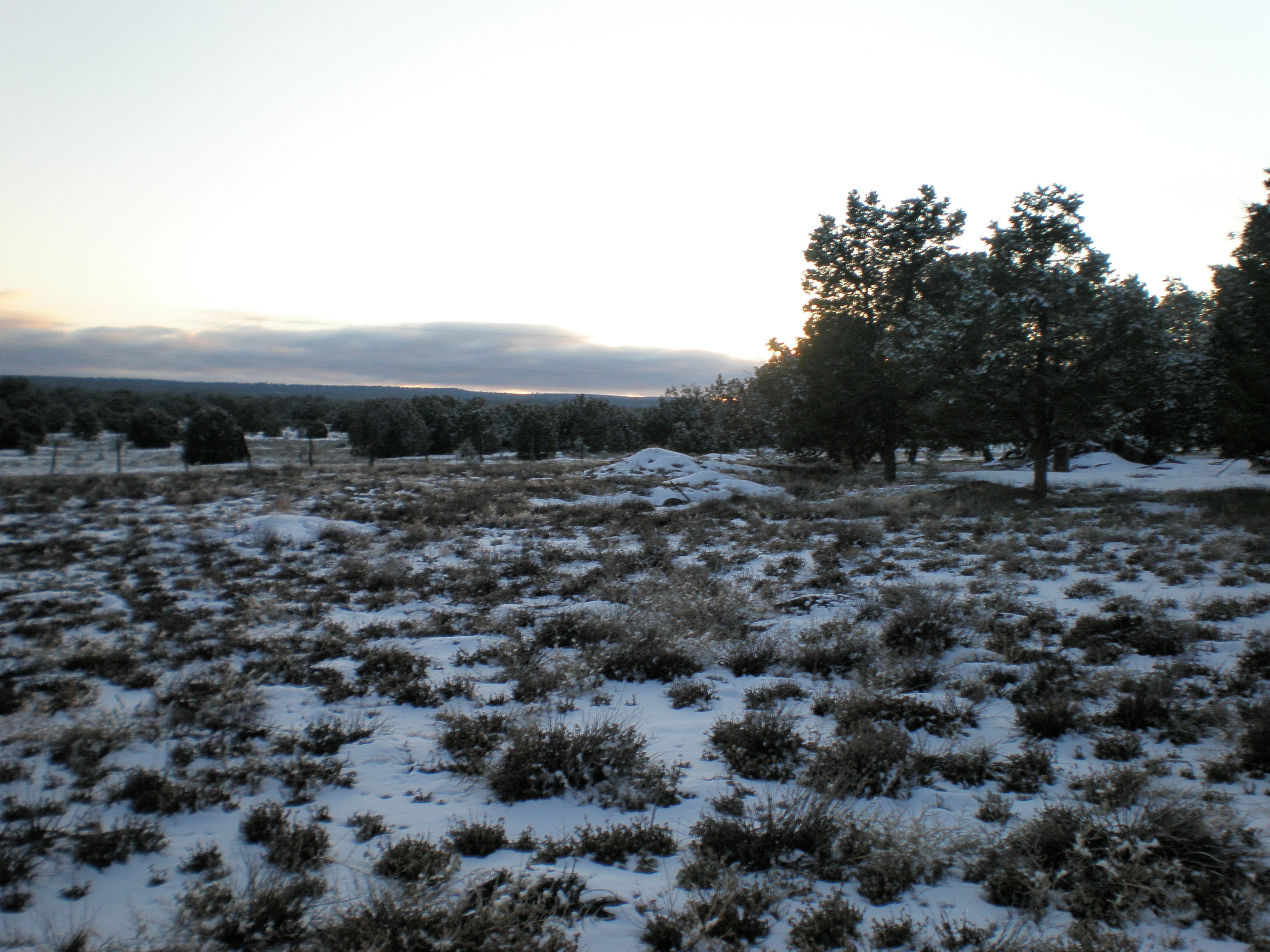
We have, over the life of fourwindowspress.com, presented poetry and essays about Continental Divide, New Mexico. It is a small place off Interstate 40 to the east of Gallup. The area has a variety of races and tribes, Navajo, Pueblo (especially Zuni and Acoma), Hispanics, people from the Middle East, and Anglos. The majority of the population are Native Americans. This photograph by Ethel Mortenson Davis is taken just on the other side of the fence around our house looking southwest–more west than south, at sunset. You can see the Zuni Mountains behind the rabbit brush, sagebrush, juniper, cedar, and piñon trees. There are about 360,000 acres of pristine wilderness in the Zuni Mountains. What you cannot see in the photograph are the elk, mule deer, jack rabbits, rattlesnakes, mountain lions, bobcats, lynx, black bears, grizzly bears, cattle, horses, coyotes, and dogs that sometimes make noises in the night that get our two wonderful dogs, Pax and Juneau, barking. This is only one angle from our house. The forest is thicker if you swing the camera lens just a little bit. From our second story you can see the red cliffs to the north and Mount Taylor, the area’s towering mountain rich in Navajo and Pueblo beliefs, to the east. We live in a wild, rural place that presents some challenges–we are sometimes without electricity or water for a day, but that also causes tourists to stop and get out their cameras.

Photograph by Ethel Mortenson Davis
11 Comments

Filed under Essays, Ethel Mortenson Davis, Photography

More Awards

Ethel and I have received so many award nominations at this point we can no longer keep up with all of them. We are so grateful to the poets and writers who have esteemed us enough to notice our, and our children’s and grandchildren’s, poetry, art, and photographs, in this way, and we want to acknowledge them and their work. In the great poetry schools the major method of instruction is criticism, but we have always believed the opposite is more important: That the creative impulse blossoms into a field of flowers best when the environment is supportive and filled with teaching that encourages the best in poets and artists. We want to build those who have noticed our work and encourage them in their own work, so here are those who have nominated us recently:

Dark Zone, who nominated us for a Versatile Blogger’s Award. Aslan is a poet and short story writer in the dark zone.

Written Words Never Die, who nominated us for a Liebster Blog Award. Eric’s short short fiction is worth a visit.

The Plaid Ant, who nominated us for another Liebster Blog Award. The Plaid Ant’s poetry is filled with joy, humor, and humanity.

Since we have won these awards before, we acknowledge those who have recently nominated us for them again.

Leave a comment

Filed under Essays, Poetry

The Versatile Blogger Award and the Kreativ Blogger Award

At this point Ethel and I are overwhelmed with awards. When you are nominated for an award the honor is deeper than you really deserve. I try to spend part of most days looking for new poets and artists, and when Ethel and I find one our reaction is, Ahhh, so this is what the publishing world missed in its competitiveness! Just think about how many unsung geniuses have existed since humankind discovered painting, song, and literature. The blog world is wonderful because it shares the hearts, spirits, and trying of beginners, those beginning to find their skill, journeymen, and masters, and it does so, as it does with these awards, by passing praise on, building strengths rather than concentrating on weaknesses. A creative explosion is inevitable, and this explosion has led to the creation of a river of creativity larger than the great Mississippi, and the truth is that we are only a small raft on that river, but we thank those who have nominated us and rejoice in their work.

The Versatile Blogger:

1. You must give credit to the person that has nominated you and create a link to their blog in your post.
2. You must create a list of 15 blogs that you enjoy most and link to those as well. Then you must go and tell them you have nominated them. That means if you do not have 15, you cannot do this step. If you do not complete this step, then you cannot claim this award.
3. Finally, you must create a list of seven things about yourself.

Those who have nominated Four Windows Press: Caddo Veil, whose spirit shines through her writing like sunlight on new fallen snow and Heather Whitley Gibson, who is beyond versatile, writing poetry and songs, creating art, and taking photographs that can send you away from a winter storm into another place altogether.

The Kreativ Blogger Award:

For this award Ethel and I have to share 10 things that you may not know. Then we have to pass the award on to at least six (or more) other bloggers.

Those who nominated for windows press: Scriptor Obscura, who deserves fame and fortune as a writer and poet and Slowmoto.Me, whose photographs stun you and poetry moves you the way poetry should move you.

Bloggers for the Versatile Blogger:

1. http://johnstevensjs.wordpress.com
2. gonecyclingagain.wordpress.com
3. fromaflower.wordpress.com
4. sfederle.wordpress.com
5. poeticlicensee.wordpress.com
6. skyraft.wordpress.com
7. ebbtide.wordpress.com
8. bardessdmdenton.wordpress.com
9. creativityaroused.wordpress.com
10. inaweblogisback.wordpress.com
11. erikamossgordon.wordpress.com
12. davidreidart.wordpress.com
13. bennaga.wordpress.com
14. tikarmavodicka.wordpress.com
15. southernmusings.wordpress.com

Bloggers for the Kreative Blogger Award:

1. raindancepoetry.wordpress.com
2. extrasimile.wordpress.com
3. belfastdavid.wordpress.com
4. thebackgroundstory.com
5. tasmith1122.wordpress.com
6. fewhitehead.wordpress.com

These are certainly not all the fine poets, artists, and photographers on wordpress we enjoy, but it is a good sample. Ten things about Ethel and I you may not know:

1. We raised three children and have four grandchildren
2. Ethel was raised on a dairy farm near Wausau, Wisconsin
3. Thomas (Tom) was born in Delta, Colorado and mostly grew up in Grand Junction, Colorado
4. Ethel is an artist as a cook as well as being a wonderful poet and artist
5. Tom is the Dean of Instruction at Navajo Technical College in New Mexico in the Navajo Nation and has been President of two tribal colleges, the co-founder of one, and the Dean and Acting President of another
6. Ethel loves animals with a deep and abiding passion and has been close to rattlesnakes, bears, both bald and golden eagles, and Minnesota wolves, among a long list of others, in the wild
7. Tom is well known in the world of high performance computing and technology and has written a scholarly book on sustainable development
8. We were married in Grand Junction on Christmas day because it was the only time both of us could get off at the time—44 years ago this Christmas day
9. Our house has books on shelves in every room, and we have read every one of the books in the house over the years
10. Ethel studied art at the University of Wisconsin-Madison and Tom did his studies at the University of Wisconsin-Oshkosh and the University of Wisconsin-Green Bay in English, History, and Environmental Science and Policy

15 Comments

Filed under Essays, Ethel Mortenson Davis, Thomas Davis

Kevin Davis

We must not only be subjected to painful experiences. Life, within all its complexity, is not simply a “good” experience–it is full of all sorts of experiences. In so many respects this stands as one of the most beautiful aspects of life. Alazanto

2 Comments

Filed under Art, Essays, Photography

Midas had no Regrets on the Day When Poetry and Family Died

by Thomas Davis

The unemployment rate during this time of the Great Recession is haltingly going downward. It is acting like a rusted pair of gears that have been unused for years, but now someone has decided to make them do their old work again. They turn, but so slowly they barely seem to move. A little oil might help the economy’s gears, but that, coagulated in the veins of political discourse, seems to be in short supply. Republicans are into magical thinking: Motivate the rich, and they will invest the new money they get, even though they are not investing the piles they have piled up now, and the gears will not be only oiled, but greased. They seem to be incapable of understanding that money is not the central reason for living and therefore not the Great Motivator they would make it seem.

Of course, maybe they have not learned what Midas learned. If all you care about is gold you run the risk of turning into a Midas-shaped gold bar. Maybe they are so tuned into the vibrations of the wealthy’s economic machinery that they have forgotten to feel how sharp wind is as snow pelts out of the dark skies of early morning. Maybe they can no longer see the beauty in a mountain chickadee braving the storm for the last seeds left in bird feeders in the pinyon tree outside the kitchen window. Eyes made of gold have trouble seeing out of their golden pupils.

The Democrats are a little better. They seem to understand that when people buy and use the goods and services of commerce, the gears work a little better, but they seem caught in a spider’s web of Republican actions and words and their own dreams of golden sunrises pouring lucre in their pockets from the Great Wealthy. Even Obama, who I once thought was the Great Hope, does not seem to be able to maneuver even modest amounts of oil onto the gears. You can sense he is trying when the great Golden Powers That Be are not yanking his chain toward the magical thinking they espouse, but the gears are moving slowly.

As I sit my cluttered home office in Continental Divide, New Mexico touching my keyboard’s keys, I am haunted by so many things I can hardly visualize them. They flit in and out of existence as if thoughts are more miasma than words.

If I am motivated by anything, it is poetry: The words, thoughts, visualization of a graceful pinyon growing out of a crack in a sandstone slope so steep it is almost a cliff, ideas, symbols and metaphors echoing back into the history of human writing and thought, deepness of my love for Ethel, my wife for going-on 44 years. To sit down and write a sonnet is a joy that has always, even in grief’s entrails, made life worth living. But, of course, poetry is not enough. Not really.

Family, wives, sons, daughters, granddaughters, grandsons, all the relationships that make us who we are as humans, is more important than poetry, or the words that sound endlessly in our human heads, or anything else that comes solely from ourselves. Neither our selves nor those who make up our relationships will last forever, but while we are here, flailing about in the noise and contemporary world’s tumult, they provide a place where joy and happiness can exist. The people in the family have to be strong and gentle in their relationship to you and each other. Love true and generous can lift you past the humdrum of everyday while living through the everyday, but a good family and good relationships are much more important than even poetry, though God knows I love poetry and sometimes (if they are not too full of themselves and what they do) poets.

But inside these goodnesses is the canker of how to make a living, how to be part of the middle class always striving to make ends meet and go out on the town by buying a meal at a restaurant. Poets can starve. That’s the poet’s old image. Families can struggle. Relationships always take work and struggle. But if a nation has a purpose, its purpose is to take care of its people, to make both poetry and family possible in a way that does not force poets to starve and struggle does not wholly define and mar relationships in a family.

The Great Recession is not a blessing for either poetry or families or much of anything else. Ethel and I have been lucky. As an educator, working hard to make the future better for students and the Navajo Nation, I have been joyfully employed during this difficult time. But my students and their families are struggling even more than they struggled with poverty during better economic times, and as the middle class my parents struggled so hard to find their way into thrashes like a blind, caught beast in the trap it finds itself in, feeling like it is dying a slow death if not actually dying that death, I despair. What is going on? What is the answer?

Is technology the culprit underlying the foolish and miasmic words and actions of the political elite? Does it eat jobs as if they are a great crocodile’s prey, threatening the livelihoods people all over the world need in order to have the chance to live good lives? I have embraced technology and the future it promises all my life, but maybe I was wrong. Will innovation, the panacea offered by political speeches and my instincts, truly be the savior? Does one profession really die only to be replaced by another that spins human society on down the road to an improving future?

Has education, the deepest of my passions after poetry and family, become obsolete?

I reject that notion with every fiber in who I am, but I also know that a teacher, trying to teach with thirty-five students anything in a classroom, is just a talking head, and all over the nation Governors of the Great State Of are forcing more and more students into classrooms that cannot effectively act as places where learning can occur. Accountability! the pundits cry out. Accountability! All the while saying you can’t throw good money at problems. You have to solve the problem, forgetting that once this country had the greatest education system and greatest economy that ever existed until their wisdom started tinkering with it. The day Accountability! became the mantra and Those Who Raised Themselves By Their Bootstraps after inheriting their Daddy’s money began wanting the education system to increase their personal wealth by training students in a way that took the burden of training workers off them and their business, the performance of public schools began spiraling downward. Charter schools, tax breaks for property owners, especially for the elderly (meaning, of course, for the guy who owned the factory in the center of town and the rich Cadillac dealer on the corner), databased outcomes, and testing, testing, testing! followed the creation of an issue that has now become a crisis. The education system is broken, they say. Teachers are freeloaders living off the fat cats’ largesse that they have to give out in taxes their tax breaks fail to save them from, and it is wrong.

In the end Midas had no regrets. He was a golden statue looking out with sightless eyes at the universe’s beauty around him. Hopefully the Occupy and 99% movement, flaring in cities around the world, will wake up politicians and get them to provide at least a little grease for the economy’s rusted gears. May God grant that there is still room in the universe for poetry and families that have a chance of living the American dream inside a cocoon of the middle class. May the Education Reform movement choke on its numbers so that teachers can teach again and awake the genius of innovation and art in our wonderful children. May poets and teachers both celebrate the honors that they deserve.

And, as I move into the twilight of my life, may I be at peace, believing that the arrow of time is not carrying us toward a dead statue standing in a pool of greed that shines as golden as an indifferent sun.

2 Comments

Filed under Essays

Occupy Wall Street!, but Don’t Run your New Model T into a Gully in the Middle of Nowhere

My mother, at eighty-five, tells the story of when she was a young ten year old girl in Oklahoma. Her grandfather, a farmer with a wonderful old barn he had built with his neighbors, bought a Model T. He had driven a team of horses his whole life, but finally broke down after his neighbors all started buying into the newfangled form of transportation. After teaching himself to drive, he often went to town and took his granddaughter with him.

However, his driving skills were never perfect. He could not get used to an engine that could not understand the English language. He kept telling the car to “Whoa!” and “Hurry up!” Sometimes he remembered about gears and brakes and sometimes that was beyond a lifetime of habit.

One day he decided to go visit my mother’s uncle in an Oklahoma town far enough away that the only option, if it was a day visit, was the car. My great grandmother had farm work to do, so my Mom and great grandfather got into the dust-covered black Ford. Everything went well at first, but then “Grandpa,” as my mother called him, got to mumbling to himself the way he did when driving the team of horses that lived in the barn. Pretty soon the car was wandering out of the dirt road toward the gullies that ran beside the road.

Then, suddenly, Grandpa came out of his reverie, terrifying the ten year old in the seat beside him, and started saying, “Whoa you son of a bitch! Whoa!” as the car headed toward the deepest gully they had come across since leaving the farm.

“Hit the brakes, Grandpa!” my mother said. “Hit the brakes!”

“Tell the goddamned son of a bitch to stop!” Grandpa roared.

Miles from nowhere, during a time when there was no guarantee another car would pass that day, the car jolted into the gully. Neither Grandpa nor granddaughter were hurt, but Grandpa put his forehead on the black steering wheel and said, “son of a bitch.”

Telling the story my mother never uses the exact language she heard my grandfather use. Ladies still do not use that language in public, according to her lights. Yet, she has a way of making sure you understand exactly what my great grandfather said.

What is important about this story, at least to me, is that it illustrates just how mutable time is and how difficult a time we humans have adjusting. We get comfortable with our lives, especially as we get older, and then some newfangled technology comes along, our neighbors and friends grab onto it, and suddenly the “son of a bitch,” useful as it may be, is a team of work horses who refuse to obey our commands. Our habits and past conflict with present realities, and we suddenly find ourselves in a gully in the middle of nowhere with a steaming carburetor and responsibility for not only ourselves, but our grandchildren.

My mother has no memory of how her grandfather got them out of the predicament he had gotten them into, but she remembers his red face, banging on the black steering wheel, and his frustration. Life had gotten out of his control–at least for that moment.

Change has been speeding up for most of my lifetime. I remember a moment on the playground of my school in Delta Colorado when one of the sixth graders mastered an impression of Elvis Presley, who was the newest rage among teenagers. The school principal was not amused by his hip grinding and wild rock n’ roll gyrations, so different from the church choir music he liked, so the sixth grader was hauled into the office. This caused an explosion caused by the sixth grader’s friends. Pretty soon the school yard was filled with elementary school kids chanting, “We want Elvis! We want Elvis!” I had no idea why we were all chanting until I got home from school and had to face my Mom, but I chanted anyway.

This pop culture change has kept going from Elvis to now. The other day at Navajo Technical College I had a young woman in my office that had metal studs arced across the top of her forehead in rainbow colors. She was not in my office because I was upset by the rainbow embedded in her forehead. If I was upset by that I could not be a Dean of Instruction at a contemporary college. But the point is that I thought it was normal, a part of the pop culture scene that changes every few months as young people reach out for actions and decorations guaranteed to upset their elders.

Whether the change is large, the replacement of a culture built around horses with a culture built around automobiles, or small, embedded metal studs in a beautiful face, change creates a change in each of our individual and group landscapes. Change outside of us creates change in us.

I watched Ken Burns’s Prohibition mini-series on television during the last several nights. One thesis of the show was that the growth of immigrant population from Eastern Europe created part of the undercurrent in convincing enough of American citizens to pass the Eighteenth Amendment to the Constitution. Other currents were present in the movement as Progressives of the era tried to protect the family from ravages of alcohol and envisioned a world where decency and the American way were the norm. But if the movement had progressive elements, it was, at the same time, deeply conservative. If the evangelists of the prohibition movement were progressive, trying to protect women and children, they were also reacting against the change in the American population. America was a great place if its character could be protected from the Irish, Polish, and other undesirables coming through Ellis Island to the mainland U.S. in droves.

In the end the unintended consequences of Prohibition were huge and, more often than not, undesirable: The organization of organized crime, the flouting of Constitutional law by millions of Americans, a jump in political corruption, and even a sharp increase in the consumption of alcohol by a dedicated group of anti-prohibitionists. Both the changes occasioned by immigration (sound like a familiar theme in today’s politics?) and prohibition moved masses of people as battles for the American soul were fought with passion and, sometimes, ruthlessness. Those who believed in prohibition stirred up those who believed a drink a day (plus a few) kept the doctor away, and event after event unfolded until suddenly the Great Depression created an environment where the Twenty-first Amendment repealing prohibition became inevitable.

Today we are seeing similar currents and cross-currents sweeping across the nation. The Tea Party clamors to return to an era that did not work while prohibition was in full swing, threatening to send the country into yet another Great Recession or Great Depression. Reacting to that young people are shouting out, “Occupy Wall Street,” while the media, which, after all, is owned by the conservatives who claim the media has a liberal bias, calls for the young people to clarify what they want even though anyone with two cents worth of brains can easily tell what they want. They want the wealthiest one percent of the country to have less wealth and the bottom 99% to improve their collective futures by a transfer of wealth from the top 1% to the middle and lower classes.

The Tea Party wants America to be America without changing another iota, letting wealth grow even more wealth, letting conservative religions dominate the political and social landscape, and letting Americans be Americans without the taint of illegal immigration mixing an “undesirable” strain into the American melting pot.

I will admit that I agree wholeheartedly with the Occupy Wall Streeters in New York. I believe the my-way-or-the-highway Tea Partiers are another version of the true believers Eric Hoffer once warned the world about. I do not believe they are so venous they will lead us into a Night of the Broken Glass as the radical conservatives of Hitler’s day did, giving power to the evils of Nazism, but in their pursuit of freedom they seem to be perfectly willing to attack anyone who disagrees with any item of their ever-more-radical agenda, refusing dialog and compromise, and ignoring facts in pursuit of conservative purity.

Change is never easy for individuals or groups. My mother loves telling the story of her grandpa, but grandpa inevitably was not as amused as she has become over time. The unintended consequences of prohibition should act as a cautionary tale, even to those who believe as passionately as I do that the rich, who Scott Fitzgerald said were different from the rest of us, need to become more like the rest of us for the good of us, including them. If I did not live so far away from New York City I would consider joining the Occupy Wall Streeters.

As I look at the struggles of Americans without work and without prospects, I am willing to take a chance, to chant “We want Elvis!” on the playground of life even though I understand, as an aging adult, that the action and reaction of humanity never creates a straight line toward ultimate good, but mazes into a pattern that might improve things if the force of history is toward progress rather than regression.

May what I believe end up as good as I intend it to.

Leave a comment

Filed under Essays

The Zuni Mountain Poets and the Gotcha Society of the Angry and Uber Rich

What participation in the Zuni Mountain Poets has taught me is that education works best when strengths, rather than weaknesses, are emphasized. Under Jack Carter North’s tutelage, learned while he was a teacher for the Zuni School District, no one is ever corrected during the Sunday poets’ meetings. All the poets who bring poems read them, and then those who wish to comment discourse on the poem, trying to deal with the poem and not the sideways and byways of human discourse. The system is simple and direct, but the results are extraordinary. Poets that begin coming to the meetings hesitant become, over time, sure footed, strengths began to develop into a characteristic style that is almost always recognizable, and the result is a music larger than any single poet or voice.

To say that I am deeply troubled about today’s educational system is an understatement. The educational system has clearly become a reflection of the larger society, and that society, with its growing number of families in poverty, shrinking middle class, and destructive politics, is sick. The philosophy that inspires the Zuni Mountain poets is largely absent as the Gotcha Society of the Angry and Uber Rich rail against the elements of American society that once made it exceptional: Its social safety net, growing middle class that believed their children would be better off than they were, its extraordinary ability to invent and make things, its fabulous arts and architecture, and an education system that was something new under the sun: It served everyone and not just those pre-destined by their parents and the elite to become society’s elite. The movement away from the charter schools of early American history, the Latin Schools, was a signature accomplishment

This morning my daughter called from Green Bay, Wisconsin. She was telling me that teachers in the Green Bay School District, a district she fought to find a job in because of what she believed was its overall excellence, were shocked and so upset that some were in a daze. Last week they received their first checks since the Great Scott Walker and his Republican minions began to gleefully declare open war on Wisconsin teachers. Most of Green Bay’s teachers had received a pay cut that amounted to hundreds of dollars per pay period. Some of the older teachers, according to my daughter, were wondering how they were going to make their mortgages while keeping their children in college. All the teachers were afraid that even though they had worked hard to become teachers, they were now going to be challenged to live the American dream of owning a house, sending their kids to college, and having a two car garage. My daughter then went on to say, “And Dad! They still have a deficit in the tens of millions of dollars! The school board is going to have to cut the budget some more!”

Scott Walker gave the uber rich a big tax cut in Wisconsin and believes in his gut of guts that progressive taxation is wrong, wrong, wrong. He is against class warfare where the poor and middle class defend themselves against those who are taking the spirit out of the country. He is sure that the job creators will create more jobs if only they are given more incentives so they can have more fancy toga parties beside their swimming pools and on their yachts. He is convinced that if you eliminate unions, cut out the social safety net, and generally lord it over the middle class, the wealthier classes will be better off. Let’s do charter schools, he says. Let’s privatize education and let the private sector fix what is broken.

After all, look how good the private sector, after its great accomplishment of eliminating government regulations, did when the build-up to the Great Recession we are now living through happened. They increased poverty, shrunk the middle class, started the War on Obama in an effort to ensure the election of their champions, foreclosed on millions of homes, destroyed millions of lives, and ate at the finest five star restaurants in the country. In the process they created the Tea Party and negative energy that rages like a bull in the china closet of life, crashing into the country’s precious artifacts, such as the Constitution they claim to love, and leaving the government as well as everyday lives of everyday people in shards.

The Zuni Mountain poets, though they face ups and downs, are a metaphor for a different path. In education a child who is down on themselves can be lifted up through praise and a belief in abilities hidden from themselves and their friends. When I was a young teacher at Menominee County Community School on the Menominee Reservation, I remember my first day there during a snowy December. We had young people standing by the school’s heaters staring out into space. If you tried to talk to them, they did not respond. They acted like traumatized victims with PSTD.

In the early days there were a lot of problems with Menominee County Community School. As an early experiment in Indian Controlled Education, its efforts to approach education from a different direction did not always work, but there is one thing to be said about the teachers and staff at the school. They cared about those students standing along the walls and acting up in the classrooms. They tried to do something about self concepts and attitudes that had no place in society, no less a school. They worked at finding the good in those students, and sometimes, though not always, a turnaround occurred. There are students who eventually earned a college degree because of teachers who saw good in students that they did not see in themselves until it was nurtured into consciousness.

If a school or country is building a dream so strong it vibrates the bones, that school, or country, will succeed. Verna Fowler, President of the College of the Menominee Nation, which, once upon a time a long time ago, I helped found while working with her, liked to say that if you strengthen a strength you weaken a weakness. Positive thought, positive emotions, dedication to building something good and lasting reverberates toward success. Constant criticism, harping, divisive games in the dark of night, bitter sarcasm, hatred, anger, belief that an individual is part of God’s chosen people while the rest of humankind are scum, fear, messianic zeal that leads to extreme acts of whatever kind, all lead to complications, upset people, confusion, and a downward spiral difficult to turn around. If you believe in a human being, listen to their story, and then do something to help them achieve their dream, even if that something is as small as a cheerful good morning or as significant as a helping hand, then societal growth and success is possible. If you sit in your hundred million dollar mansion and spend your days trying to figure out how you’re going to make 400 million rather than 350 million dollars this year, and forget about the least of us while proclaiming your Christianity, then malaise is the likely result as your greed creates the conditions for general troubles and societal failure.

The world is more complicated than I am expressing here, but also as simple. Saying good morning and building strengths in individuals will not end the malaise the educational system or the country is facing. But, in the end, I believe in the dream of George Washington, Thomas Jefferson, John Adams, Samuel Adams, Alexander Hamilton, and all the other founding fathers. I believe in the wisdom of the Zuni Mountain poets even though I doubt my own wisdom. By building for the good of all the people, holding out in front of us ideals worth living for, we can build a citie on a hill, the old American dream. By not serving all the people and pushing for the good of the few, all we can do is create a gulf between the few and the many so large that it can, after a generation of unfairness and injustice, threaten the foundations of the exceptionalism that once was America and is now threatened.

1 Comment

Filed under Essays