Tag Archives: poetry

Healing Bear

a photograph and poem by Ethel Mortenson Davis

Mudjekeewis:

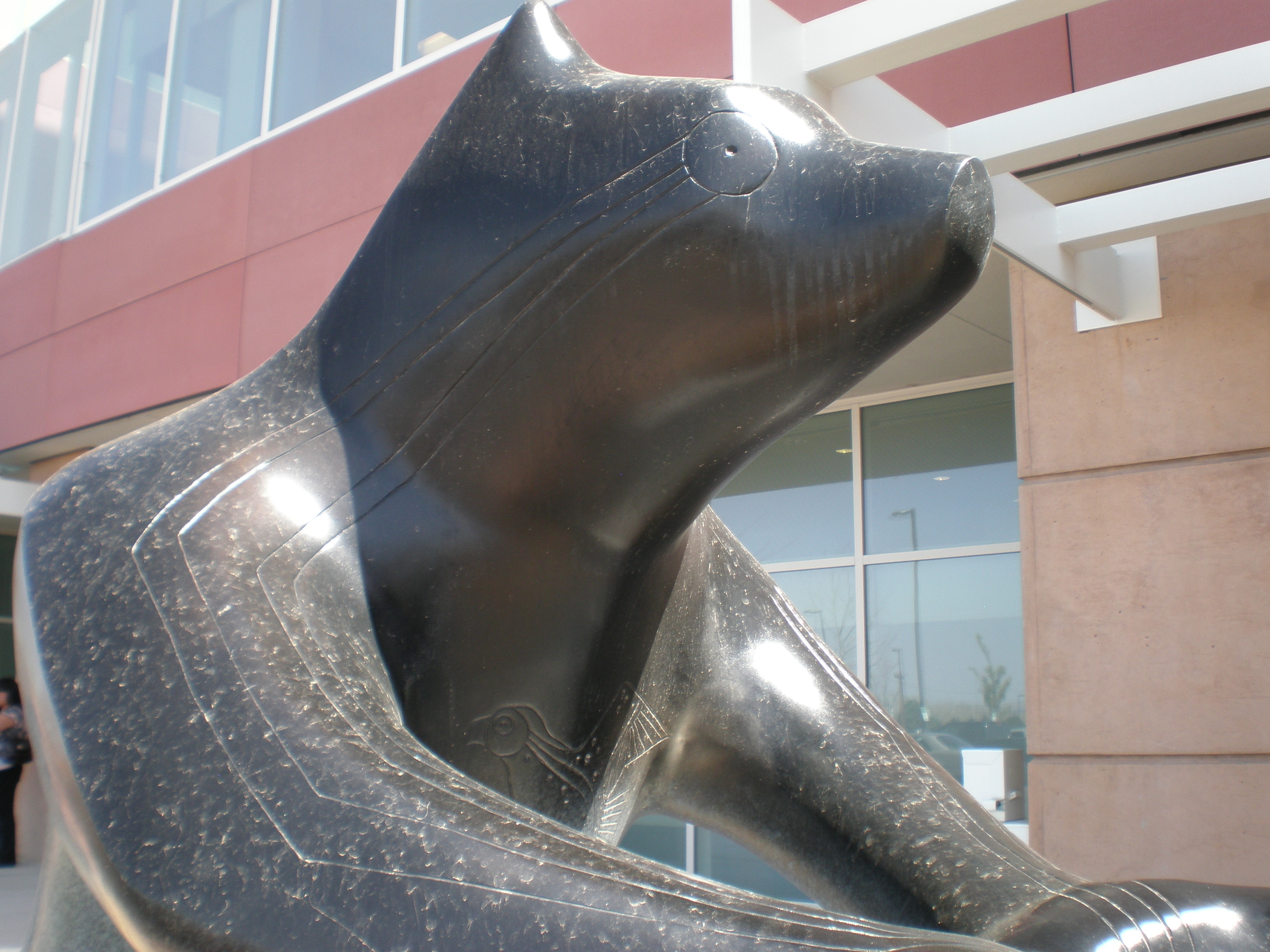
El Oso de Salud or “the healing bear” is the symbol of the UNM Cancer Center and a Native American totem of power, health and protection. The bear, by the sculptor Gene Tobey, is the animal most closely associated with mudjekeewis, the spirit keeper of the west and source of responsibility, teaching, leadership and healing. It represents the desire to serve New Mexicans whose lives have been touched by cancer with strength, courage, grace and great ability.

Healing Bear

I am the healing bear.

I will lick you
all over
from head to foot.
I will take
the bad smells out
of your fur.

I will bring you
up out of the labyrinth
and will heal you.

I will show you
the face of your child
so small you can
hold it in your hand.

I am the healing bear,
and I will heal you.

© 2010, I Sleep Between the Moons of New Mexico.

19 Comments

Filed under Art, Ethel Mortenson Davis, Photography, Poetry

Sonnet 41

by Thomas Davis

We kissed his forehead, yellow, cold, inert,
sobbed our goodbyes, left his body, drove
to Poet’s Walk above the Hudson, hurt
beyond expression, where, on hills, small groves
of ancient trees are interspersed with fields,
a place where, Kevin said, he liked to go.

And as cremation’s fires consumed, annealed
his spirit to our spirits, as the glow
of July’s sun warmed flesh too numb to feel,
we walked where he had walked and tried to find
our balance in a world turned sad, unreal—
our son was gone, his smile, his wondrous mind.

And as we walked the wings of butterflies,
black mourning cloaks, danced through the summer skies.

At the University of New Mexico Cancer Center in Albuquerque, where I am now being treated once a week, a healing bear greets patients as they enter the building. Marked with ancient symbols, shining black in the sun, Ethel and I stand before it every time we come to the Center. The major question in my mind at the moment, one that I cannot shake, is, why am I surviving my bout with bladder cancer while Kevin, only 28 years old, did not survive? I would have given him my life without a thought if he could still be present, thinking about butterflies that were such a constant, powerful symbol to him from the time he was a child to the day of his death when, as Ethel has written in a powerful poem not yet posted, a butterfly visited his hospital room so many stories up in the middle of the city. I understand there is no answer to such a question, and I am deeply grateful to have more years with Ethel, my children, and grandchildren, but both Ethel and I miss our son. This sonnet was written after our visit to Poet’s Walk Park on the Hudson River in New York. Ethel has also written about our experience there. After this moment we flew back home to New Mexico. Just over a year later we discovered my cancer. One of Ethel’s many photographs of the healing bear is below as a symbol of survival and strength in the face of devastating tribulation.

photograph by Ethel Mortenson Davis

31 Comments

Filed under Art, Essays, Ethel Mortenson Davis, Photography, Poetry, Thomas Davis

Orion

by Ethel Mortenson Davis

In the early morning
Orion is already setting
In the western sky.
I follow it,
getting closer
to the spring equinox,
pointing north past
the north star.

The north,
where spring first appears
in bunches of wild leeks,
the first green in the forest,
dug up by deer
for their delectable bulbs.
Then a carpet of
spring beauties and anemones follow,
flooding the forest floor.

It was there
where you laid your head
in a bed of wild flowers.
The fiddle-head ferns
were just unwinding
and in a month
would reach our shoulders.

It was there,
where you wore
bells on your hips
so as not to surprise
the black bear with cubs
and the gray timber wolf
on his trek across the land.

Now Orion sets in the southwest,
pointing toward spring.
I will plant corn this year,
perhaps on the western side
of the garden.

© 2010, I Sleep Between the Moons of New Mexico.

20 Comments

Filed under Ethel Mortenson Davis, Poetry

10. Not Just a Little Girl Alone

by Thomas Davis

I

The morning light spilled on the floor and woke
Wei from a dreamless sleep. She yawned and stretched,
Got up into the cold of early morning.
She built a fire to take the chill away,
Then fried potatoes on the stove before
She shrugged into her heavy coat and stood
Before the door, her heart-beat loud, her hands
So still they felt as if they’d never move.
She felt her mother’s hands move through the air.
She let her hands move like her mother’s hands.
Light jumped into the early morning light.
Outside a hissing sound steamed through the air.
Wei stopped the motions, pushed against the door.

A wall of snow confronted her beyond
The space her light had made around the door.
She started weaving hands again, the light
Streamed from her fingers in the frigid cold.
Snow turned to steam, a whiteness hissing up
Into the morning’s crystal clear blue sky.
She walked toward the wood pile, open ground
Materializing as she slowly walked.
She felt triumphant, filled with victory.
The storm was gone, and she could make a path
Through seven feet of hard packed, drifted snow.
She’d make it through the winter storms and cold.
She was not just a little girl alone.

II

The Old One, tired from lack of sleep, went out
Onto the ledge outside her cave and launched,
her wings alive to currents in the air,
Her eyes so deep with seeing that the universe
Throbbed, blazing morning light, around her head.

She flew above the cabin where the girl
Was steaming snow into the morning skies.
The sight of magic shining in the sun
Unsettled her; the girl unsettled her.

A moment later, higher in the sky,
She saw two hunters, with their snowshoes sunk
Into the sweeping plains of drifted snow,
Strain up the mountainside, the snow too deep
To let them make the three day trek to where
The human girl was gathering her wood.
They’d be at least a week at struggling
Up slopes that steepened rising into mountains.

What should she do? She asked herself, disquiet
a power in the steady beat of wings.
What madness had the girl brought to the world?

She swooped toward the hunters, forcing them
To see her hurtling from the shining skies.
The hunters stopped and looked at her, dismay
And fright stunned through the way they stood and looked.
The one she’d singed raised up his arm and fist.
She tipped her wings and soared toward the mountains.

She flew above the cottage where the girl
Was loaded down with heavy chunks of wood.
She swooped so low she had to swerve to miss
The cottage roof, her whirling, golden eyes
Locked deep into the girl’s small human eyes.

Wei did not flinch or turn her head away,
But looked into the Old One’s eyes, a question
Unsaid inside her look. Ssruanne soared high
Toward the mountain peaks again, toward
The places where the wind blew unabating
In fierce intensity and moaning rage.

III

Wei felt the dragon’s wings before she saw
The eyes that coldly bored into her mind.
She felt intelligence inside the glare
And felt the dragon searching deep inside
Wei’s heart. She stood and watched the golden dragon
Fly up toward the mountains high above
The peaks that towered over where Wei lived.
She fought to memorize the dragon’s shape
And how it felt inside its golden eyes.

IV

Inside the moaning winds the Old One sent her thoughts
Toward the human girl. Run child, she thought.
The hunter has his cunning and his bow.
The dragons have no love for human kind.
Child, run and hide, she thought. From all of us.

Audio: Not Just a Little Girl Alone

Note: This is the tenth installment of a long poem. Inspired by John Keats’ long narrative poem, Lamia, it tells a story set in ancient times when dragons and humans were at peace. Click on the numbers to reach other sections, or go to the Categories box to the right under The Dragon Epic. Click on 1 to go to the beginning and read forward. Click on 9 to read the ninth section of the poem. Click on 11 to go forward one section.

10 Comments

Filed under Poetry, The Dragon Epic, Thomas Davis

The Aureate Song

by Ethel Mortenson Davis

The golden-throated lark
has returned to play
his gilded song,
a three-dimensional tune,
as if it comes
from golden instruments
cast in some
heavenly place–
like the music
from the golden singing
bowls of Tibet,
hammered and made beautiful
by Buddhist monks.

16 Comments

Filed under Ethel Mortenson Davis, Poetry

Horses

by Ethel Mortenson Davis

Because they can’t feed them,
the poorest people
turn their horses loose
in the desert.

These horses find some
grass and weeds
a couple of months in a year,
but mostly brown stubble,
and water that is impossible
to find.

Finally they round some of them up,
with sand in their bellies,
and ship them to slaughter houses
in Mexico
where men with knives kill them
by stabbing them up to twenty times
before they are brought down,

before they see
grass as tall as their shoulders
near a watering stream.

29 Comments

Filed under Ethel Mortenson Davis, Poetry

Sonnet 40

by Thomas Davis

The doctor, looking down at him, her voice
as soft as early springtime rains: “I hate
how cancer takes a person, steals their choice,
and makes inevitable their certain fate.”
She paused, a stranger. Then she shook her head.
“He was extraordinary. You can tell.”
She gently touched his clutched-tight hand, the bed…

“He asks the nurses how they are. The hell
he’s going through, he wants to know if they’re okay.”
She sighs and looks at Ethel, then at me.
“This ward is tough. Old cancer never plays,
but does his business, never lets us plea

for mercy.” Silence. “Fighting him is hard.
He leaves us memories, our lives in shards.”

25 Comments

Filed under Poetry, Thomas Davis

Soliloquy

By Ethel Mortenson Davis

I have been a soliloquy
upon the landscape–
A letter on the horizon’s poem.

I have been accustomed
to aloneness.
We travel well
together.
She has been with me
when I searched
the deep forest
as a child
and
now in the desert,
allowing me to be
who I am,
learning from the sacred earth—
the poetic ground.

She has made me
resilient
like the coral desert blossom
I picked yesterday
and found in my pocket
today,
still fresh, still alive,
still vibrant,
drawing from the deep water
held tightly
within.

© 2010, I Sleep Between the Moons of New Mexico

25 Comments

Filed under Ethel Mortenson Davis, Poetry

9. Ruarther’s Threat

by Thomas Davis

As Reestor glared at him, Ruarther felt
As if he’d turned to stone, his spirit hard
And eyes as cold as when the wall of ice
Had overtaken him inside the field.

“We’ve been at peace with dragons much too long
To start a war with them,” the old man said.
“You’re dreaming’s not enough to have them fly
Above us as their breaths chars all we love.”

“It was no dream,” Ruarther growled, his temper blazing.
“The dragon singed me with her stream of fire!
We have to kill the witches’ girl, or else
The world will change in ways that weird us all!”

Ruanne, disoriented, looked at her only love.
He’d kill the child? She’d dreamed of having children
Since childhood, playing with her handmade dolls.
What child had powers strong enough to cause
Grown men to quail before their unlived lives?
She tried to see inside Ruather’s rage
And understand what fear was driving him.
A hundred times she’d thought she’d earned his love,
But every time he’d danced away from her.

“Why do you meld the dragon with the child?”
A stubborn Reestor asked, eyes fixed on rage.
The man was weak yet, still affected by
The storm he’d barely made it through to home.

Around them half the village stood inside
The hall, the argument a bane when winter
Was harsh enough to threaten all of them
If they could not depend on long-term braids
To knit their wills together as they strove
To live until the distant, longed-for spring.

“The dragon spoke about the child,” Ruarther spat.
“Why wouldn’t they be linked? She spoke of her.
If not from spelling by the witch’s child,
Why would a dragon speak again to men?”

Old Molly grasped Ruanne’s slim hand and hissed.
“You’re young, young man,” she said. “Your blood runs hot
Or else you would have known what good is yours.
You’re foolish. In the past we fought the dragons,
And many died, but then the dragons seldom
Attacked unless they were alone, but now
They have communities just like this place.
If stirred, they’ll come together in a pack.”

Ruanne felt like she ought to scream the swirl
Of roiling feelings trapped inside her chest.

“The storm is done,” Ruarther said. “I’ll go.
It doesn’t matter what the village thinks.
I see the danger rising in a cloud,
and like I’ve brought back game when others failed,
I’ll save the village from temerity.
The weirding’s got to stop. The girl is dead.”

Ruanne heard children screeching in the snow.
The storm was over. Now they’d laugh and sing
As if the awful winds and cold had never been.
Inside her mind she felt the dragons flying
In multi-colored packs, an endless stream
Of fire and deadly claws out of their caves.

“I’m leader still. Not you, not yet. You won’t
Go up the mountain,” Reestor said. “We need
More meat. The hunters have to hunt for game.”

Ruarther glared at him. He glanced at Brand.
The hunter looked away as if he heard
His young ones as they worked to dig a path
Between the cottages through feet of snow.
At last Brand looked into Ruarther’s eyes.

“No hunter has your strength or skill,” he said.
“You need to throw your madness out and be
The leader that you’ve always been for us.”

“Nobody understands,” Ruarther said,
His bitterness a rancor in his voice.
“Nobody felt the heat of dragon flame.”
He turned and looked toward the hall’s great door.
He looked at Reestor. “I have always done
What’s good for all of us,” he said. “I’m certain
Deep down that what I’m doing’s for the best.”

Before the men around him moved, he strode
Toward the door, his face implacable.

Ruanne took flight outside her thoughts, her feelings
As raw as skin upon the head of children
Brought out into the light outside the womb.

“You’re wrong,” she heard herself say, voice as sharp
As sharpened knives. “You cannot kill the child!
To kill a child forever marks the soul
With blackness stained into an evil life.”

Ruarther stopped and looked into her panicked eyes.

“I’ll love you all my life,” he said, voice loud.

He turned, picked up his bow, plowed through the snow
Toward the stone wall built around the village.
Inside the hall a hunter, Cragdon, startled,
Then left the hall to join Ruarther’s rage.
His young wife grabbed at him, missed, wailed with fear.
The young man did not stop or even pause.

Audio of Ruarther’s Threat

Note: This is the eighth installment of a long poem. Inspired by John Keats’ long narrative poem, Lamia, it tells a story set in ancient times when dragons and humans were at peace. Click on the numbers to reach other sections, or go to the Categories box to the right under The Dragon Epic. Click on 1 to go to the beginning and read forward, 8 to read the installment before this one. Click on 10 to read the next section.

13 Comments

Filed under Poetry, The Dragon Epic, Thomas Davis, Uncategorized

Train Ride

by Ethel Mortenson Davis

She feeds him sweets;
he, her, in the seat
ahead of us.

Yesterday, we were young,
but today,
as we climbed
in the Adirondacks,
we felt our age–
hand over hand,
root over root,
tripping over history
and boulders.

I waited for you,
you, for me,
our legs straining
like stressed trees,
trees that send out
a chemical substance
like aspirin
to buffer
their dying–

a train we too
will have to catch.

All four of us stopped
to photograph
droplets of water
on the red maple leaves
suspended like placid lakes
in the rain-soaked day.

But now,
the conductor calls out,
“Express train to
Manhattan,
Grand Central Station–
The Big Apple.”

16 Comments

Filed under Ethel Mortenson Davis, Poetry