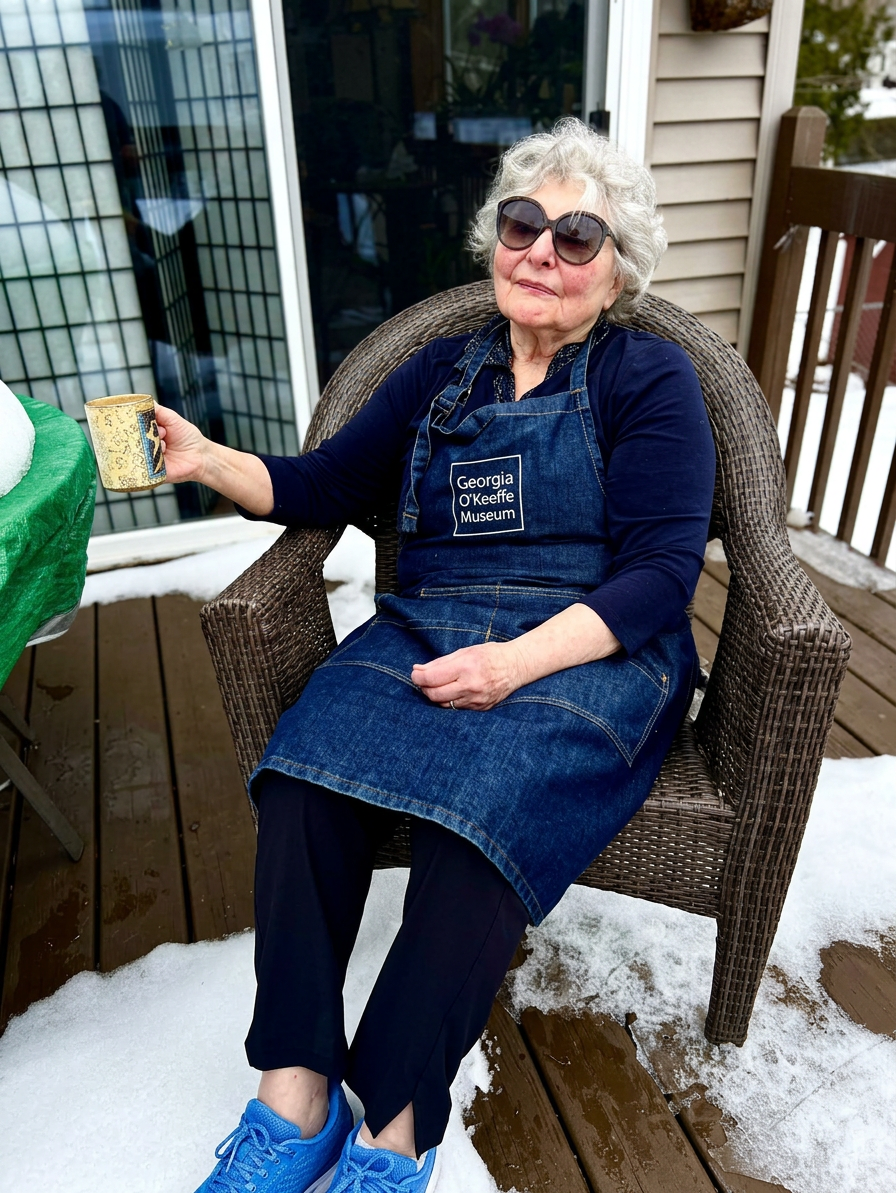
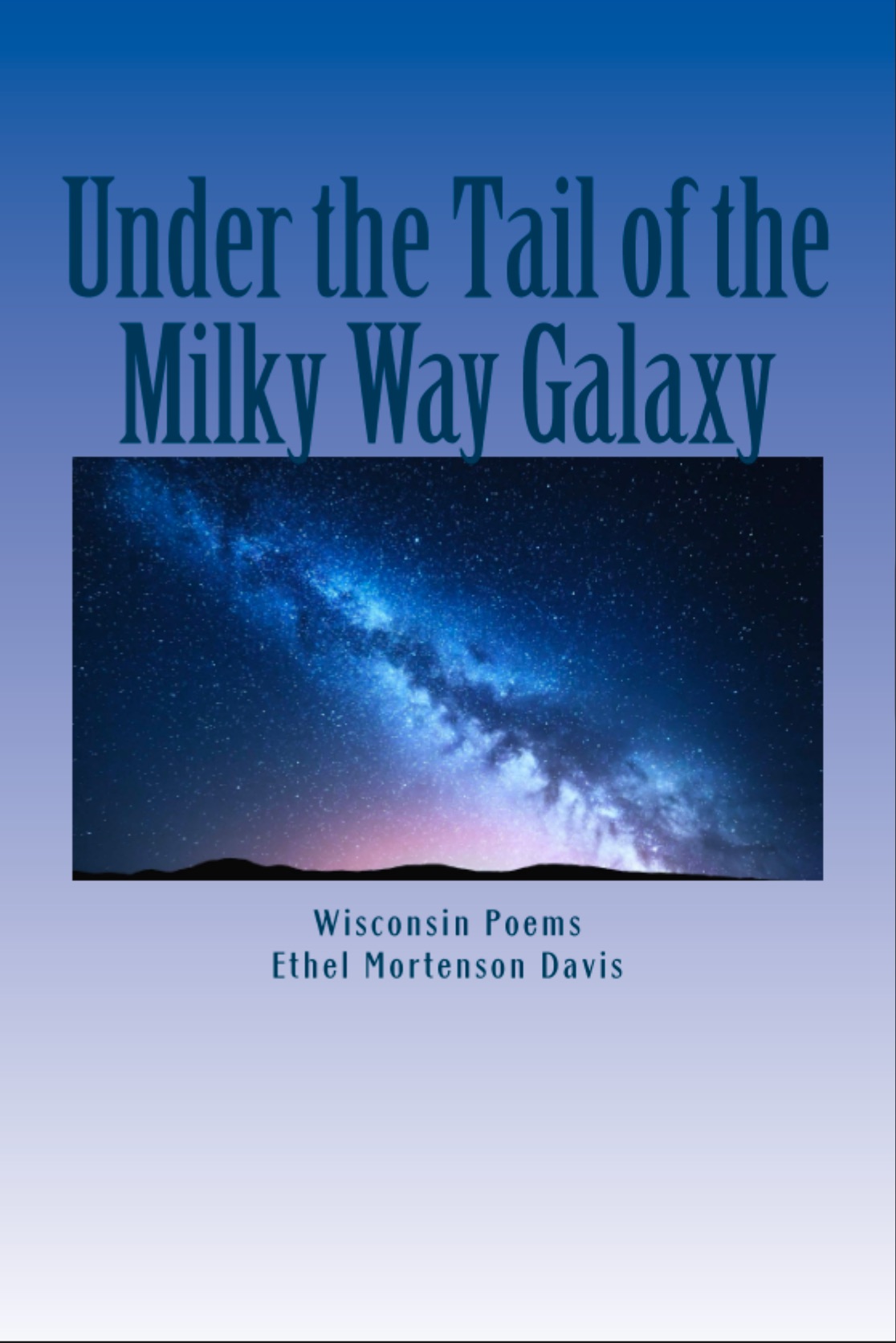
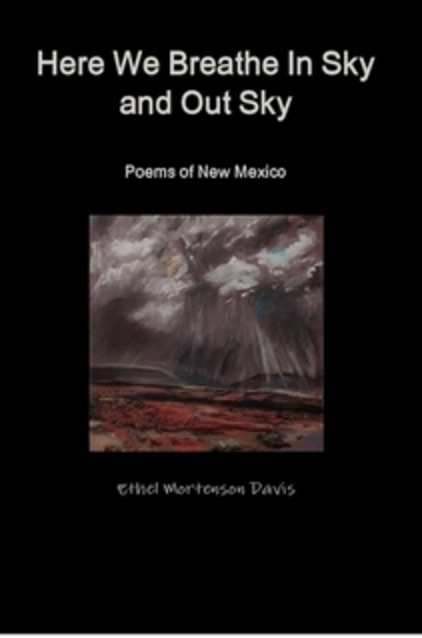
In the latest issue of Poetry Highland, a Chinese/English bilingual journal of poetry edited by Yingcal Xu, Ethel Mortenson Davis’s photo, along with the photos of the other poets in issue 5, appears on the back cover. For several years now, Ethel, who is, of course, the love of my life, has had her poems translated into Chinese through journals associated with Xu.
When I first read Ethel’s poems when I was twenty years old and attending Mesa Junior College in Grand Junction, Colorado, what struck me was how powerful they were as they explored themes that seemed to be much larger than those I was attempting to imbed into my efforts at becoming a poet. The intensity of the images
For You
You
smell like
wild snow
or
of trees
that hug
the earth.
Turn your head.
you can hear
the moss
cling to the sides
of trees
and the sun
make your hair
the color
of red honey.
Not there.
Leave that hill
unnoticed.
stunned me. That intensity, as well as what I thought of as “their originality,” seemed so powerful that I wondered if I could ever become half the poet this young woman, the sister of someone I knew, already was. “make your hair/the color/of red honey.” Who would have ever seen that?
We have been married for close to 59 years now, and the truth is that my amazement at her accomplishments as a poet has never ceased. She has published eight volumes of poetry at this point, and she is working on a new book. We are in our eighties now, but her ability to write poetry or create wonderful pastels has never flagged during all these years.
This is the third essay I have written about her poetry. In the last essay I showed how her poetry has its roots in Imagism, Chinese poetry, and even the philosophy driving beat poetry, expecting readers to construct the meaning of the poems by pairing disparate images and connecting those images to what she is expressing without directly saying what she means.
This poetic technique is becoming increasingly common in the AI age, although it is an ancient technique as I showed in my last Ethel essay. In the Navajo poet Sherwin Bitsui’s book Flood Song, for example, images that, on the surface, have little relationship with each other create poems that are almost surrealistic in their juxtapositions. The poems are always grounded in the natural world of Navajoland—the high desert, mountains, canyons, buttes, flora, fauna, and geology—but reading Bitsui requires the reader to reach beyond logic to find meaning in the wholeness, sometimes violence, of intense, clashing images.
Just realizing that when you approach an Ethel Mortenson Davis poem you have to look for more than what appears on the surface really doesn’t begin to explain the importance of what she has accomplished. The work of a lot of contemporary poets, although it is truly valuable and worth the effort to read and explore, leaves too many people, at least in American culture, feeling that they can’t really understand poetry—so why bother?
The majority of Ethel’s readers don’t normally have that reaction. Almost everything she writes is easily accessible to almost all readers, even young people. Our daughter Sonja teaches fifth and sixth graders at the Catholic school in Burlington, Wisconsin, and she keeps informing her mother that several students, year after year, when they do their creative writing unit, just “love” her mother’s poetry.
An early poem like “Spotted Pony”
The Spotted Pony
When the last leaf
has touched the earth
unseen,
and the sky is bright
like a spotted pony,
spring touches me
with her warm, soft muzzle,
exploring me with moist breath
and ballooning nostrils,
questioning me
with quick nudges
and rude pushes,
until I jump on her back
and ride full gallop
against the wind,
holding on tight
to her warm, round belly.
can be read by anyone, and the image of spring as a spotted pony creates a metaphor that is immediately accessible. The exuberance of the poem jumps off the page. Admittedly, there is more to the poem than just the image it presents and the emotion it engenders. What is Ethel saying about the nature of the earth, spring, and humanity and our relationship to the earth? I think that’s buried in the meaning of the poem even though I am sure none of Sonja’s students think about the poem, if they read it, that way. Nor do the majority of her readers.
In Archibald MacLeish’s poem, “Ars Poetica,” as I pointed out in my last essay about Ethel’s poetry, he says, “A poem should not mean / But be.” What MacLeish is getting at is the idea that poetry is not a mere collection of words when it reaches its apex. It is not about ideas or facts or arguments. Nor should it be taken literally. It should not be utilitarian, teaching or persuading or having a specific purpose or aim.
Instead, transcendent poetry achieves a timelessness that relates humanity and the natural world across time through a poem that is a work of art like a Leonardo da Vinci painting or a Rodin sculpture or any human effort that exists within space but is also like a singularity, a unique point where rules, equations, or even predictions break down. It is a living “be.” It is. It is a singular work of art.
Again, this is really an ancient equation. Both Chinese and Japanese poetry strive for exactly this kind of ideal. Certainly some of the ancient poetry of the Western tradition, like Beowulf or the Finnish epic Kalevala, or any number of poems that seem like stories but transcend the time that they depict, are living “be” in MacLeish’s formulation.
In a talk given outside at Norbert Blei’s old chicken shack at the Write On Door County writing center in Door County recently, Al DeGenova, a contemporary poet and the editor of After Hours literary magazine, said that Blei’s theory of poetry, drawn from the writings of Allen Ginsberg and Jack Kerouac, among other beat poets, was that poems should come from a trance-like state where the poem arises from an unconscious space in the poet. It should touch the ancient springs of experience that echo into the poet’s contemporary life.
I have always thought that the best poems Ethel has written over the years exemplify MacLeish’s idea that a poem must be. They seem to come from a place inside her that is not drawn from conscious thought.
A poem like Emily Dickinson’s “I Could Not Stop for Death” goes beyond what most of us think about when we consider mortality and its role in our lives. The themes in the poem stack up into almost a hymn: the personification of death as a courteous gentleman rather than something terrifying lying ahead of all of us; the carriage journey as a symbol of the progression of life, passing children at play, fields of grain, and the setting sun; the depiction of a grave as a home; then the idea of centuries feeling shorter than a single day.
In a different way, Ethel’s poem, “Rainwater,” is every bit as expansive even though it is not one of her most noticed poems:
Rainwater
All night
I heard the dog
barking for someone
to help him.
Over the week
his barks became weaker,
until they ceased.
Today the rains
came gently, slowly.
I had to adjust
the rain gutter outside
and got my hair wet.
Rain in the desert
is a cleansing,
renewing
experience,
cleaning what man
leaves in all the earth.
Passing the hall mirror,
I noticed my hair
shiny, soft, and curly.
I remember when you
ran outside to catch
the rainwater.
You said it made your hair
so beautiful and shiny,
cleaning it
like nothing else.
Today, in the field,
the vultures are circling.
The ominous note in the last line, “the vultures are circling,” is contrasted with the gentle rain and getting the poet’s hair wet and the address to you, someone the poet obviously cares about, and the reflection about rainwater making hair “so beautiful and shiny,/cleaning it/like nothing else.” All of this is inside the frame of “the dog/barking for someone/to help him./Over the week/his barks became weaker,/until they ceased.” I’ll let the reader decipher the multiple meanings derived from the juxtaposed images. This is not a particularly comfortable poem. Nor is “I Could Not Stop for Death” by Dickinson.
Ethel’s poem is anchored in an image of a particular moment in time. Dickinson’s and Ethel’s poems are obviously dramatically different. But both, in the end, seem as if they are delving beyond conscious reality into something deeper, perhaps a vision drawn from what Carl Jung called the “collective unconscious,” that place in human experience that reaches into all of it and becomes enlightenment.
None of the really serious poets, despite their cultivated reputations, are sunshine poets. Ethel and I saw a documentary about Mary Oliver’s life recently and were shocked by how difficult a life she led and how much she marched to a different drummer. That life and her alternative lifestyle were the reality of who she was. She has had the reputation of a modern-day transcendentalist, in the tradition of Ralph Waldo Emerson or Henry David Thoreau, or maybe a mixture of both. Still, much of her poetry has shadowy themes of predation, death, and trauma.
Similarly, the public perception of Robert Frost as the white-haired grandfather poet who uses nature to teach us the wonder of nature and the human condition ignores a whole body of his most brilliant poetry. A poem like “Home Burial,” where a husband perceives his wife’s concentration on the grave mounds of their children out of an upstairs window, explores the depth of isolation of two people close to each other who could not be further apart—and is really cold-eyed in its depiction of a certain reality. Or there is always “The Witch of Coos,” which tells the eerie and unsettling story of bones rising from the cellar and getting locked in the attic, exploring guilt and the terror of secrets within a household.
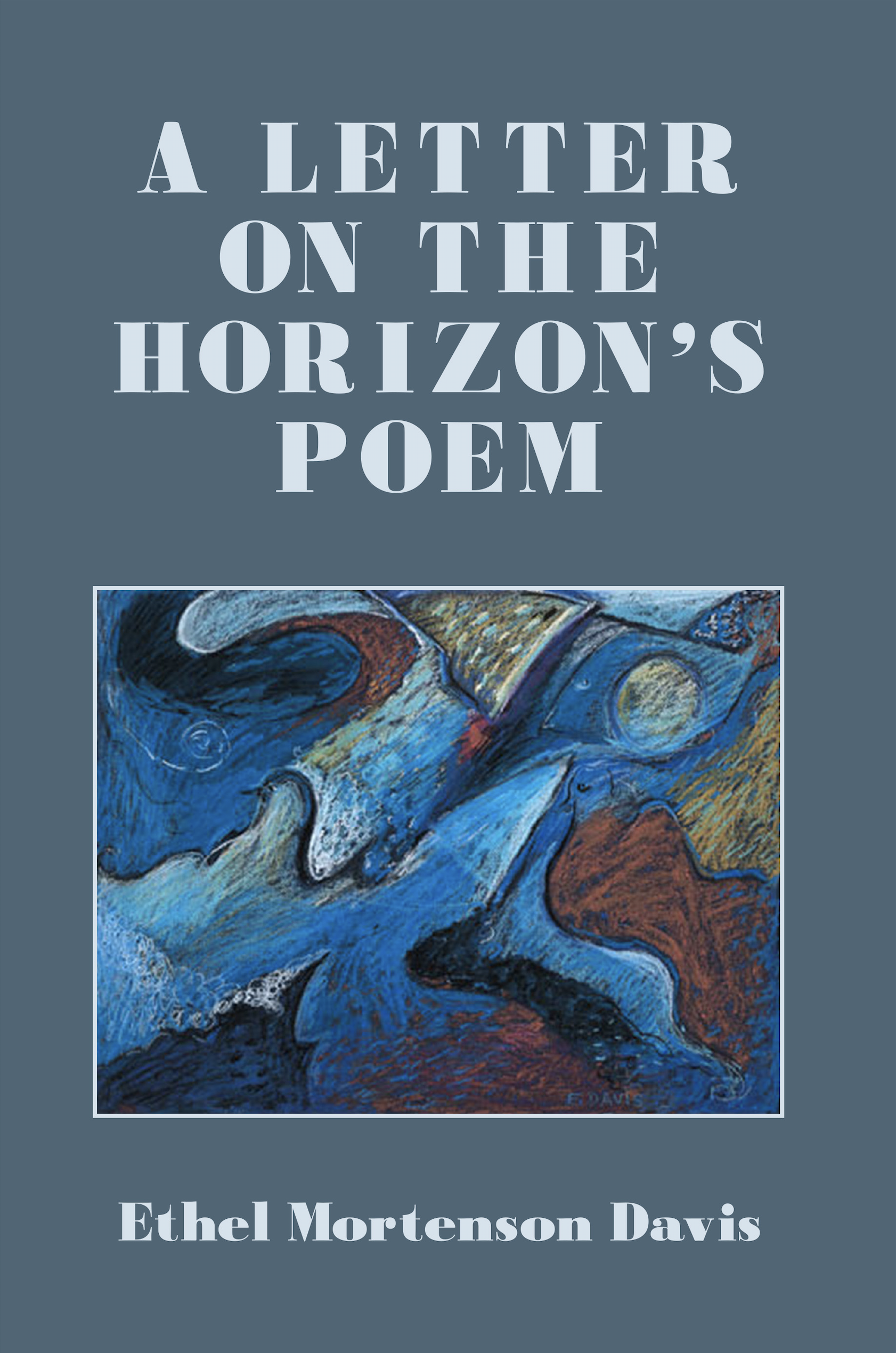
In some ways, my favorite book of Ethel’s is A Letter on the Horizon’s Poem (Kelsay Books), which starts in darkness. A poem like:
Winter Soldier[1]
They have come home
to hate war,
the winter soldiers,
after being in Iraq.
Some had fun
killing civilians.
Some did not like
killing them,
picking them off
as they walked
along the streets,
or rode their bicycles,
or drove in their cars.
Maybe, if we stay
long enough,
we’ll get rid of
all the Iraqis.
Blackwater convoys
came up a one-way street
the wrong way.
Cars coming down
tried to pull off
and were shot, people
killed in their cars.
A doctor and his mother
were in one of the cars.
Blackwater shot the young man
while the mother
clung to her son,
but the car did not stop
so Blackwater fired
a missile into the car.
It became an inferno.
Both mother and son
fused together.
Seventeen civilians
were killed
[1] Stories from returning Iraqi soldiers against the Iraq War at Silver Spring, Maryland, March 15, 2008.
This is a poem that has an edge. It is political, contemporary, and still manages to reflect on humanity and the terror it has created and is still creating. The final image is not comfortable for anyone to see in their mind’s eye.
The entire book moves from darkness to the earth. Animals and landscape saturate nearly every poem she has written—rattlesnakes, wolves, bears, horses, rabbits, dragonflies, birds—and in the next section after darkness, nature is dominant. Nature becomes an enabler of our humanness.
Sweetgrass
It is a time
when the smell
of sweetgrass
hangs heavy
in the ear
of summer,
when light lingers long
in the night,
and we let go of
what is not right in the world,
when we drift
across the tall grasses
to where fireflies
are whispering
to each other.
In this small pocket
of summer,
the deer
have finally
let themselves
be seen.
Then the book moves to healing, a section that contains some of her most powerful poems:
The Healer
“…you have been yourself at the edge of the Deep Canyon and have come back unharmed” An Elder of the San Juan Pueblo. 1959. V. Laski. Seeking Life.
“I was invisible” An Asiatic Eskimo. 1980. D. Cloutier. Spirit Spirit, Shaman Songs.
In the snowy canyons
you came to me
as an eagle
and whispered
(in almost audible sounds)
“the key to the secret
of healing. . .”
For my wounds
had gone beyond wounds
and had festered
into deep holes
in my sides,
and gangrene had set in,
but, in a whisper,
you came and said,
“you have the keys within you.
You are the stars
in the starry night.
You are the source
at the mouth of rivers.
You have the medicine
to heal
already in your bones.”
And my wounds became
as faint as the sound
of feathers,
as pale as the ringed moon.
And the healer
came to me
in the face of the wolf.
She came
and nodded to me
with her deep intelligence,
and her eyes told me,
“your spirit is strength.
Your force is as great
as volcanoes,
for your goodness prevails
over the dark;
your goodness
has brought you out
of the deep canyon.”
And again the healer
came to me.
This time as a bear,
a joyous white bear
with great white paws,
and she told me,
“you were invisible,
but now I see you.
You have gone
to the edge of the great canyon
but have come back
unharmed.
“And now your laughter
will become
as mountainous as thunder,
and your tears
will be the tears of glory!”
I tell you.
I have put my ear
to the great Earth
and have felt your presence.
A Letter on the Horizon’s Poem moves through a seven-book structure (Darkness → War → Earth → Remembering a Son → Healing → Life → Endings) and traces a deliberate arc: from personal and historical trauma, through grounding in the natural/spiritual world and grief for a child, toward healing, ordinary life, and finally a clear-eyed reckoning with mortality. Seven themes dominate the collection: war and human cruelty; the natural world as mirror, witness, and teacher; indigenous spirituality and healing traditions; healing and resilience; aging, mortality, and endings; environmental loss; the poet’s own solitude and vocation.
When I’ve written an essay on Ethel’s poetry in the past, I’ve analyzed individual poems, the traditions the poems belong to, the techniques she used, and how all of that ended up fashioning the meanings she imbedded into what she’d written. What I wanted to try to accomplish with this essay was an analysis of how the body of her work is much more substantive than what could be explored by focusing on any one poem or even small groups of poetry.
By emphasizing A Letter on the Horizon’s Poem, I don’t mean to deemphasize her other books. Each individual volume has its own strength, as is true of almost every serious poet who has created a substantial body of work. In A Gatherer of Days and Lights and Secret Places, she pairs her poems with 12 full-color photographs of pastels, giving that particular volume a sense of the breadth of her accomplishment as both poet and artist. Her success in the Chinese/English journals comes from a lifetime of producing, since the days when she was a teenager, poem after poem and art work after art work that, at least to her husband, adds up to a significant artistic accomplishment. What more can any artist in any medium wish to achieve?