Photos by Ethel Mortenson Davis


When we lived in Continental Divide, New Mexico, one of the many glories of the area where we lived at the foot of the Zuni Mountains were the great hummingbirds that were in the area from spring to fall. Sometimes in the pinion trees outside our house, hundreds of hummingbirds gathered and then dive bombed, perched, and hovered around the red feeders that Ethel filled multiple times a day. Gold, green, brown, and red flashed in the special New Mexico light as a celebration of life and living darted here and there all over our yard and into the field where horses were grazing out the back window. Sometimes Ethel would go out to water the wildflower garden she kept going until winter set in through the hottest of summer days. The hummingbirds didn’t seem to have any fear of her, but buzzed within inches of her head as they dipped in and out of the spraying water. The high desert is so dry so much of the year, and you would think that life had to have an almost impossible time surviving. Yet, the hummingbirds, beautiful and raucous, were only part of what was present in this unbelievably beautiful place with its small mountains and soaring red cliffs. Birds, elk, mountain lions, mule deer, antelope, jack rabbits, and a host of other life survived among the pinion and juniper forests that spread out over the land. Sometimes we’d even have a stellar jay landing beneath our apple trees, its dramatic crown and blue fire startling as it strutted in the small shade. This was hummingbird heaven–a place where we could sit in our living room as a fiery sunrise blazed on the eastern horizon and watched dawn glint off hummingbird wings.

Filed under Essays, Ethel Mortenson Davis, Photography, Thomas Davis
by Thomas Davis
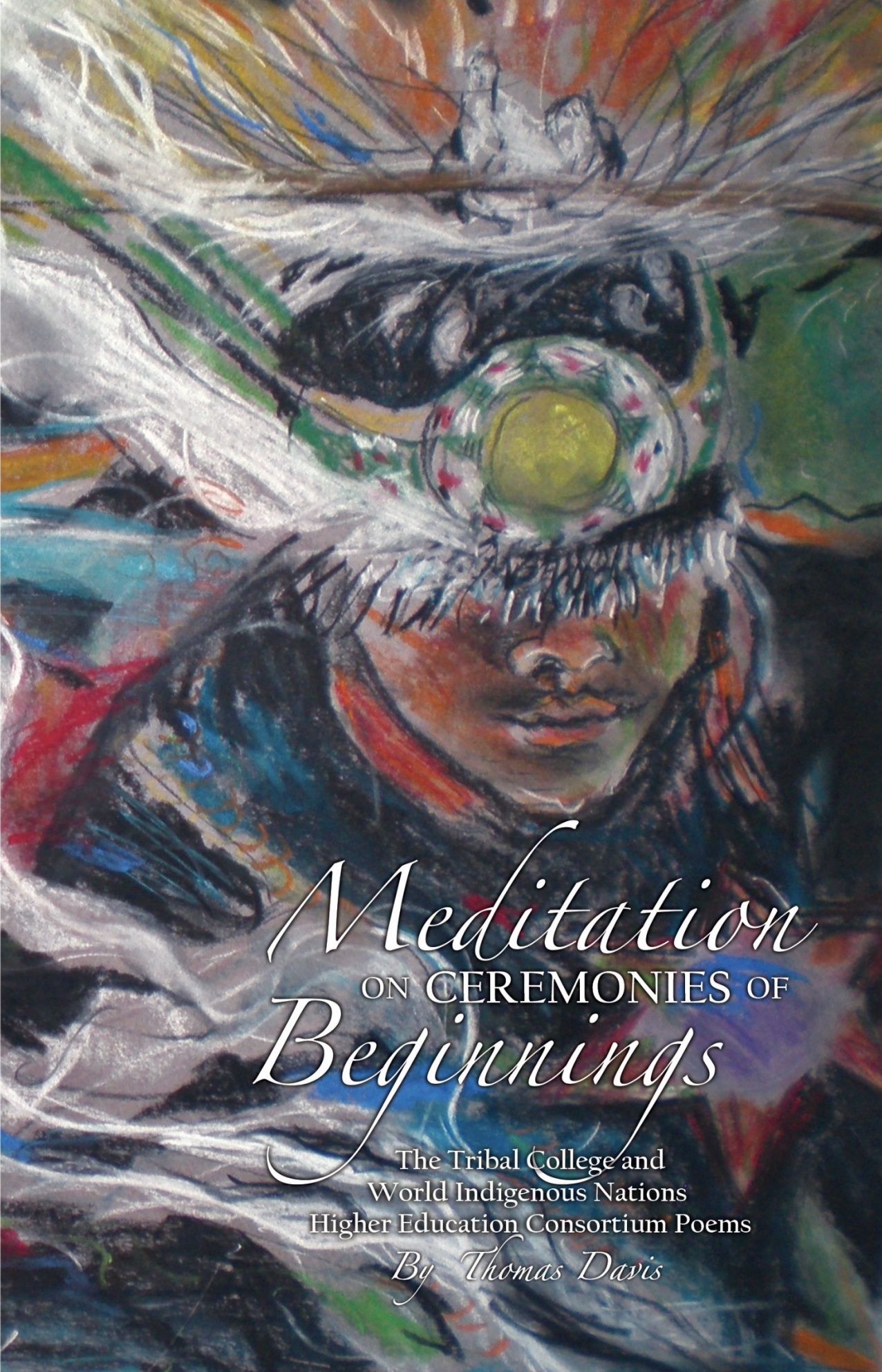
At the Door County Published Author Book Fair last weekend, I was amazed. Four different people came up and told me that In the Unsettled Homeland of Dreams was the best book they have ever read. One person told me that The Prophecy of the Wolf was their favorite book. Ethel’s new book, The Woman and the Whale, was also popular, especially with her pastel on the cover, and, I suspect, outsold any other poetry book at the fair.
I remember spending so many years writing and writing and having absolutely no luck at all. If either Ethel and I had sold five books at that point in our lives, we would have been so excited that we would have probably floated into the air and shined more brightly than the sun. These days those days seem like a distant past, but this blog was established partially because we both wanted readers. Our beloved son Kevin (Alazanto) Davis had died, and we felt lost in a bewilderment of emotions. When we started getting readers and then more readers, some as eminent as John Looker, the wonderful English poet, we started to believe in our writing with more optimism in our spirits.
Both of us have always written from childhood on. Ethel’s art and poetry has always been a magic part of who she is. I published my first poem in The Daily Sentinel in Grand Junction, Colorado during my first year at Mesa College. With Richard Brenneman, I had also helped put together a small poetry journal in Grand Junction called The Rimrock Poets Magazine that included work by Ethel. Sometimes during those years, a poem would appear in a literary journal or magazine, but those were rare, rather than common instances, even though Ethel was, and clearly is, a major, major talent as a poet.
Not long after founding this blog, Ethel decided we would publish her first book using the new ability to self publish. I Sleep Between the Moons of New Mexico was quickly followed up by White Ermine Across Her Shoulders. I kept trying to get published with little success until I wrote the epic poem, The Weirding Storm (a book that I still think is perhaps some of my best writing), which was published by Bennison Press in Great Britain. By then our blogging friend, John Looker, had introduced me to Bennison Press, and I took a wild chance and sent the manuscript to Deborah Bennison, the publisher.
I love selling books to people person to person at book fairs and book events at book stores and other places. I suspect my father’s spirit gave me that love when he had us boys work at the grocery store he and my mother ran for all the years we were at home. I wish I had some skill at marketing beyond that skill. Still, these days I feel like I have arrived as a writer, especially in the Sturgeon Bay area where we now live and the part of New Mexico where we used to live. What a wonderful joy that has become in my life.
Filed under Ethel Mortenson Davis, poems, Poetry, Thomas Davis
James Janko is one of the most significant authors in the United States. His newest novel, Wired, is on pre-order now. I’ve ordered it. When he wrote to me telling me that he thought Ethel was one of the most important poets in the world, he directed me to a review he’d written about her latest book of Poetry, The Woman and the Whale. I couldn’t agree with him more. I think a superb writer recognizes superb writing and is a wonderful judge of what he reads.
Filed under Essays, Ethel Mortenson Davis, poems, Poetry
by Ethel Mortenson Daivs, published in Letter on the Horizon’s Poem
Once, when the creek
had swelled its banks in spring,
and I had run to meet its new boundaries
to build a raft
that could carry me down the Little Sandy
towards lands unknown,
I was sidetracked by a patch
of blue and yellow violets—
too many to let go unnoticed,
found among the wet and shady places—
and I forgot about the countries unseen.
And in fist-fulls I came running,
sharing them with you—
and you received them well,
arranging them in glass jars,
teaching me to love
the spring beauties and things,
the funny-faced Holstein calves,
and the timid chickadees
who came in December
to snatch your winter’s crumbs.
Filed under Ethel Mortenson Davis, poems, Poetry, Published Books
Thomas Davis
I don’t know that I have ever written anything about one of Ethel’s poems. She’s my wife, after all, and my love for her is as deep as it was the day we were married over 57 years ago, but I thought I’d write on the Easter at least a note about this particular poem. It’s not the only poem she’s written that deserves an essay, of course. You could write a book on the poems that are meaningful and/or powerful enough to deserve commentary.
“Healing Journey” is about a particular place, at least on the surface. Ethel was raised on a dairy farm not too far from Wausau, Wisconsin, and near her parent’s farm is a park called Eau Claire Dells. It’s a beautiful place with black stone, waterfalls, a small canyon, and the deep woods of Wisconsin’s northern mixed hardwood conifer forest. Large maples, basswood, and other hardwood trees are mixed with a scattering of conifers.
The poem starts out with a rich description of the Eau Claire Dells, “the glacial forest” on a warm and humid day. The poet is climbing the high trail that leads to a bridge that spans the highest part of the small canyon that has a river in its depths, “black granite waters.” As daylight fades, “the moss-covered boulders looked like giants strewn/by some ancient glacier eons ago.” At this point, the poem takes on its metamorphic character. Time suddenly encompasses the ancient world as well as the present-day world. In the present, “the cold air rose around my legs” and “Water trickled down everywhere — through the moss carpet/thick with the red mushroom.”
The strong, specific nature of image are characteristic of all Ethel’s poetry, of course. The sense of water in the river and trickling “down everywhere” gives us a feeling of richness, of a different place where time is stretched out while still being as fluid as water, as the “everywhere” notion that is so powerful in this particular stanza. Time becomes a landscape, preparing us for the mysticism that is at the heart of what is to follow..
What is to follow is encompassed in “I had come here before, hoping to resolve a riddle,/but now I had a disease within my body and needed help.” The poet is not well, and the disease she has is troubling her, is a riddle she feels like she must solve. She needs help.
After this line the poet comes to a bridge over the canyon. The metaphors are obvious here. There are dark waters below as they run through dark granite. A bridge takes from one side to another. A canyon in a lot of Ethel’s poetry is a symbol that has to do with a depth that must be crossed. Granite is an age-old symbol of permanence, of rock the wears away only slowly over the ages, so the poet has come to a transition over the darkness of the deep (of death? Of the darkness in the world?) while she is ill, looking to cross over from all she is experiencing.
In these troubled times, it is not difficult to see the poet as a symbol for all humanity, ill, facing a chasm where dark waters are rushing over the dark river that is always next to its journey or below its passage.
The description of the bridge, “. . .black and strong,/made with spaces between the floor planks wide enough/to see the great height at which I was,” allowing the poet to see the river as “a black granite ribbon glistening in the dim light,” is a comforting image. The bridge is strong even if it’s boards are spaced wide apart and won’t collapse if the poet steps from the path she is in on to brave the crossing she intends to make.
Then she sees across the bridge in a clearing in the forest, the wilderness, “a large crowd of people./Their faces were as warm as their hands.” The symbol of hands is interesting here. A hand is also a bridge between human beings. We reach out our hand to help someone that needs that reaching out. In this cases the crowd of faces is also reaching out as the poet crosses the bridge, the chasm, and the dark river.
Then another character enters into the poem. There is no transition here. The nightingale doesn’t appear in anyway. Instead, it whispers: These are people that have helped you/In some way throughout your life.” In classic literature the nightingale is symbolic of beauty, love, and melancholy. It’s known for its beautiful song, which has been linked to spring, mourning, and love throughout history. In the contemporary world it often represents the muse or, sometimes, spiritual purity. I suspect Ethel is using the metaphor to represent the muse inside her without losing the older use of beauty, love, and melancholy. Crossing the chasm and the dark river is not celebratory. It is a spiritual journey that has a sense of purity inside it.
After seeing the people who have helped her during her life, day turns to night, but this is not the night of the dark waters in the river below the chasm. She turns around and crosses the bridge, and “the moon was beginning to shine on the water,” but not only in the water, but also in the poet. She has crossed the bridge and now is crossing it again, changed, especially in her spirit, in a significant way.
In that crossing, the poet “felt as if the sun was beginning to rise.” The dark waters and the chasm still exist, but as in the lines of “Bridge Over Troubled Water” by Simon and Garfunkel, crossing the bridge has eased her mind–as well as her spirit.
“Healing Journey” is a quintessential Easter poem. Many people reading Ethel’s poems see only the surface created by the powerful, often beautiful, images she evokes. However, like most great poets that deserve a wide audience, there’s often more than one way to read her poems. In a recent review of her latest book, The Woman and the Whale, Estella Lauter, the poet and critic, said that many of her poems are metaphors, and there is truth in that statement.
The resurrection from the fear/anxiety of illness, whether it is in a single human being or humankind as whole, to the spiritual purity in experiencing the whisper of the nightingale (whether it is a muse or spirituality–and what is the difference between these?), sings into any reader who looks this deeply into this poem.
Filed under Essays, Ethel Mortenson Davis, Poetry, Thomas Davis
By Ethel Mortenson Davis
At dusk I found myself hurrying through the glacial forest.
The air was warm and humid, but the clay dust cool on my feet.
I was climbing the high trail to the footbridge
that crossed the black granite waters.
The daylight was fading.
The moss-covered boulders looked like giants strewn
by some ancient glacier eons ago.
As the cold air rose around my legs,
multi-colored shells of snails crisscrossed the large tree trunks.
Water trickled down everywhere — through the moss carpet
thick with the red mushroom.
I had come here before, hoping to resolve a riddle,
but now I had a disease within my body and needed help.
Finally I reached the bridge, black and strong,
made with spaces between the floor planks wide enough
to see the great height at which I was.
The black river below looked like a black granite ribbon
glistening in the dim light.
Across the bridge I could see a clearing through the trees.
In the clearing was a large crowd of people.
Their faces were as warm as their hands.
Nightingale whispered:
These are people that have helped you
in some way throughout your life.
Then it was night.
As I went back across the bridge
the moon was beginning to shine on the water,
but within me
I felt as if the sun was beginning to rise.
Filed under Ethel Mortenson Davis, poems, Poetry
Estella Lauter is out with a new review of Ethel Mortenson Davis’s latest book, The Woman and the Whale. Dr. Lauter was the Chair of the English Department at the University of Wisconsin–Oshkosh and is considered a major scholar, having published two critical analysis books by major university presses. She is also the author of several books of poetry and is a former Door County Poet Laureate, receiving that among several other honors.
By Ethel Mortenson Davis from her new book, The Woman and the Whale
The day was a day of celebration.
A small Right Whale stood vertical,
head out of the water,
straight up in the air,
his dorsal fins reaching like arms
toward the sky.
A woman diver
from a South Pacific Island
said the whale tried to tuck her
under his dorsal fin
when she interacted with him.
At first, she struggled to get away—
until she saw the shark
circling her, trying to get at her.
The whale kept his body between
the diver and the shark.
Then the whale grew agitated,
slapped his tail at the shark,
before finally running it off.
Today, the whale came back with his family,
many heads sticking straight up in the air.
Filed under Ethel Mortenson Davis, poems, Poetry, Published Books