Tag Archives: love

Beneath the Willow Tree

by Thomas Davis

Beneath the willow tree she lies down
beside the river that runs to the sea,
near the reeds and long stems of grasses
that fall gently to the flowing waters.

Has there ever been a woman so graceful?
She lies her head back and her hair cascades
Like willowy branches upon the bark of the willow.
She stirs, and her body moves in dance.

O, let the rain fall down from the skies!
Invite the thunder into the place of your house!
Rejoice that the sun is the cock of the morning!
Laugh when the wind blows through the trees!

My love is like a strumming banjo!
Touch her, and she responds with movement!
Speak to her, and her voice lifts in song!
O heart and soul of my love, do you hear?

Note: The love poems I am posting are from the earliest days of what is now a love affair that is 45 years old. I am looking back in time and celebrating who Ethel and I were when we were young and who we have been through all these years of our lives.

12 Comments

Filed under Poetry, Thomas Davis

Leo

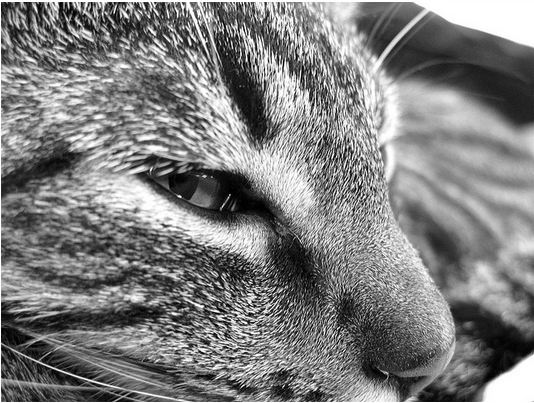
by Alazanto, Kevin Davis

Note: One of the most wonderful things in Kevin’s life was Leo. When he was so sick he could hardly move, Leo was brought to the hospital in Poughkeepsie. Kevin was wheeled to the first floor in a wheel chair. There was no expectation that he would be able to go home again at that point, although that turned out not to be true. The minute he saw Leo Kevin surprised everyone by getting out of the wheelchair and getting on the floor with his cat. Leo crawled up next to him and spent the next hour taking care of the person who had rescued him on a cold day when he was a kitten and taken him into his human life.

13 Comments

Filed under Art, Photography

On an Instrument of Ten Strings

by Thomas Davis

On an instrument of ten strings
I will make melody for her,
putting in warehouses waters from the surging sea,
holding in granaries dye-dust of a butterfly’s wings.

O woman, how long you have held me with your eyes:
Night passing to day, and day passing to night again,
time moving like a particle of sand
suspended as a grain of texture in the river’s watery flow.

The thunder of your eyes has made me a stone,
silent, and still, somehow, full of my character,
the colors of my soul blending into skies
and transforming grayness into the colors of stone-like stars.

Putting in warehouses waters from the surging sea,
holding in granaries dye-dust of a butterfly’s wings,
on an instrument of ten strings
I will make melody for her.

Note: The love poems I am publishing were written during the late 1960s and early 1970s during the early years of Ethel’s and my love. Going back to them years later, I am surprised at how much more lyrical my poetry was back then than it is now even though I write in meter or meter and rhyme currently, and most of the early love poems were free verse. This early poetry’s language was often inspired by The Holy Bible, mostly from the Books of Job, Ecclesiastes, the Psalms, Proverbs, and the Song of Solomon, if I am not mistaken. I am still writing love poems to Ethel. She, and our children and grandchildren, still provide light to my life.

10 Comments

Filed under Poetry, Thomas Davis

Uncover My Eyes

by Thomas Davis

Uncover my eyes that I may look
And see the mountains covered with shadow,
The tambourine of stars in the sky,
The trumpet of the new moon!

Uncover my eyes that I may look
And see the rain cloud tent over the earth,
The rain slant like small grey spears into the earth,
The small rivers flowing away from flinty rock!

Uncover my eyes that I may look
And see her dancing to the melodious sound of the harp,
Her feet moving like the wind-blown blossoms of cherry trees,
Her hands clapping in time to the movement of stars!

Note: This is a love poem I wrote to Ethel when we were both young. These and the children’s poems I am posting were written in the 1960s and 1970s. Reading these, I find I have lost the young poet’s lyricism. But I still love Ethel. A lifetime love is still possible.

16 Comments

Filed under Poetry, Thomas Davis

Reflections of a Country Girl for her Mother

by Ethel Mortenson Davis

Once, when the creek
had swelled its banks in spring,
and I had run to meet its new boundaries
to build a raft again
that could carry me down the Little Sandy
toward lands unknown,
I was sidetracked by a patch
of blue and yellow violets—
too many to let go unnoticed,
found among the wet and shady places—
and I forgot about the countries unseen.

And in fist-fulls I came running,
sharing them with you—
and you received them well,
arranging them in glass jars,
teaching me to love
the spring beauties and things:
The funny-faced Holstein calves
and the timid chickadees
who came in December
to snatch your winter’s crumbs.

© 2011 White Ermine Across Her Shoulders

13 Comments

Filed under Ethel Mortenson Davis, Poetry

Sonnet 45

by Thomas Davis

I name them: Sophie, Phoebe, William, Joe,
each one of them as individual
as early mornings in New Mexico
when shining light holds trees and land in thrall.
Joe, lost in circles only he can see,
and William, king of Legos, friend of friends,
Sweet Phoebe, bright as any sun, a sea
of light that’s always looking past the bend,
and Sophie, fledgling eagle nearing flight—
like William, first born, disciplined, and kind.

We’ve lost our son, and in our grief the blight
of memories assaults our days and minds,

but in our hearts grandchildren laugh and sing
and help us think we’ll know another Spring.

This is the last sonnet in the sonnet sequence I have been posting for the last several months. Kevin’s life (February 16, 1982 – July 23, 2010) was shortened by an unknown cancer that we only knew about for a few short weeks in June and July of 2010. Ethel and I traveled to Poughkeesie, New York to be with him during his last several weeks and was there during days of excruciating pain and small triumphs that ended in deep grief. The sonnets were mostly written as our beloved son lay dying as day passed day, and time’s march brought us, finally, to his death. They were written as my way of trying to deal with an impossible, unbelievable, unacceptable time. The last sonnets in the sequence were written after Ethel and I had returned to New Mexico.

Ethel has written extensively about this time too. The last poem she posted on fourwindowspress, “In the Night,” was written in a cancer ward hospital room. Some of her poetry foresaw the nightmare to come; other poems were written during Kevin’s illness. A few were written in the year and a half since we came home.

I hesitated to put these sonnets out for the wordpress world to see. Should you publish anything so raw and filled with horror and grief? In the end I am grateful I went ahead and started posting them. I am incredibly busy as Dean of Instruction at Navajo Technical College, all of us have responsibilities to our families, and wordpress can devour time, so I seldom answer the many many comments put on our blog. I have this need to try to say something meaningful, and that takes time, and if I spent that time responding to comments I would have no time to read other poets. That would make my life poorer. But the truth is that comments placed with love beneath each sonnet has been deeply moving. They have helped Ethel and I keep on keeping on, and though some days you wonder why we humans keep doing that, the answer is contained in words and voices that connect us to one another.

When this sonnet was written in August of 2010, I could tell the impulse to write sonnets about the sequence of events and emotions accompanying Kevin’s illness and death was waning as the inexorable demands of living kept dragging me through my days. When I sat down one evening and wrote it, I knew this was the last of the sequence, the reason, in the face of all our tragedies, we keep walking this good earth. A human life is not forever. We see sunlight for a day and laugh without realizing the joy we are experiencing, and then cancer or some other illness enters our lives, and we face the boundary we cannot see past. At that moment we have so little left. Pride and dreams of the future that have ticked out the clock of our lives mean less than they did before. Yet, the voices of those who have loved us and whom we have loved sound deep inside our humanity and become life’s reason, the meaning for who we have been and who we are at this moment.

I have been battling bladder cancer since it revealed itself this winter. My prognosis is positive, unlike Kevin’s, but this is a sobering time. Not only have we been with our son as he died, but my own mortality is as raw in my face as his mortality was as he slipped into a coma from which he never awoke. At such moments you worry incessantly about the closest people to you. You also wonder if you have left any legacy at all. You want to make sure the lives you have so deeply cared for are going to experience laughter that denotes joy they do not realize they are experiencing. Have you done enough? Has your life been honorable through your days? And you think about your father, who is gone, and mother, who still goes at the word, go; the love of your life; your now gone son; your wonderful daughters, and your grandchildren cusped on making themselves who they will become.

And inside your worry the New Mexico sun shines with the high desert’s magic, God’s magic, blackbirds sing liquid songs, you wake in the morning with your wife of 44 glorious years beside you, you know that you will talk on the phone to your daughters before sunset, and you hear your grandchildren in your head dancing through their prom night or chasing a kite bobbing high in a springtime sky, and you know that life is more precious than you have known and that when it is all over, you will know, in those last moment, that you have been loved and have loved. What else matters? What else truly means at the end of a long, glorious day?

24 Comments

Filed under Essays, Poetry, Thomas Davis

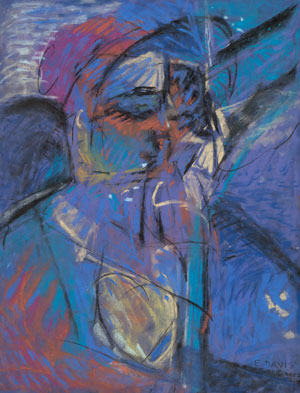
The Marriage

a pastel by Ethel Mortenson Davis

7 Comments

Filed under Art, Art by Ethel Mortenson Davis, Ethel Mortenson Davis

9. Ruarther’s Threat

by Thomas Davis

As Reestor glared at him, Ruarther felt
As if he’d turned to stone, his spirit hard
And eyes as cold as when the wall of ice
Had overtaken him inside the field.

“We’ve been at peace with dragons much too long
To start a war with them,” the old man said.
“You’re dreaming’s not enough to have them fly
Above us as their breaths chars all we love.”

“It was no dream,” Ruarther growled, his temper blazing.
“The dragon singed me with her stream of fire!
We have to kill the witches’ girl, or else
The world will change in ways that weird us all!”

Ruanne, disoriented, looked at her only love.
He’d kill the child? She’d dreamed of having children
Since childhood, playing with her handmade dolls.
What child had powers strong enough to cause
Grown men to quail before their unlived lives?
She tried to see inside Ruather’s rage
And understand what fear was driving him.
A hundred times she’d thought she’d earned his love,
But every time he’d danced away from her.

“Why do you meld the dragon with the child?”
A stubborn Reestor asked, eyes fixed on rage.
The man was weak yet, still affected by
The storm he’d barely made it through to home.

Around them half the village stood inside
The hall, the argument a bane when winter
Was harsh enough to threaten all of them
If they could not depend on long-term braids
To knit their wills together as they strove
To live until the distant, longed-for spring.

“The dragon spoke about the child,” Ruarther spat.
“Why wouldn’t they be linked? She spoke of her.
If not from spelling by the witch’s child,
Why would a dragon speak again to men?”

Old Molly grasped Ruanne’s slim hand and hissed.
“You’re young, young man,” she said. “Your blood runs hot
Or else you would have known what good is yours.
You’re foolish. In the past we fought the dragons,
And many died, but then the dragons seldom
Attacked unless they were alone, but now
They have communities just like this place.
If stirred, they’ll come together in a pack.”

Ruanne felt like she ought to scream the swirl
Of roiling feelings trapped inside her chest.

“The storm is done,” Ruarther said. “I’ll go.
It doesn’t matter what the village thinks.
I see the danger rising in a cloud,
and like I’ve brought back game when others failed,
I’ll save the village from temerity.
The weirding’s got to stop. The girl is dead.”

Ruanne heard children screeching in the snow.
The storm was over. Now they’d laugh and sing
As if the awful winds and cold had never been.
Inside her mind she felt the dragons flying
In multi-colored packs, an endless stream
Of fire and deadly claws out of their caves.

“I’m leader still. Not you, not yet. You won’t
Go up the mountain,” Reestor said. “We need
More meat. The hunters have to hunt for game.”

Ruarther glared at him. He glanced at Brand.
The hunter looked away as if he heard
His young ones as they worked to dig a path
Between the cottages through feet of snow.
At last Brand looked into Ruarther’s eyes.

“No hunter has your strength or skill,” he said.
“You need to throw your madness out and be
The leader that you’ve always been for us.”

“Nobody understands,” Ruarther said,
His bitterness a rancor in his voice.
“Nobody felt the heat of dragon flame.”
He turned and looked toward the hall’s great door.
He looked at Reestor. “I have always done
What’s good for all of us,” he said. “I’m certain
Deep down that what I’m doing’s for the best.”

Before the men around him moved, he strode
Toward the door, his face implacable.

Ruanne took flight outside her thoughts, her feelings
As raw as skin upon the head of children
Brought out into the light outside the womb.

“You’re wrong,” she heard herself say, voice as sharp
As sharpened knives. “You cannot kill the child!
To kill a child forever marks the soul
With blackness stained into an evil life.”

Ruarther stopped and looked into her panicked eyes.

“I’ll love you all my life,” he said, voice loud.

He turned, picked up his bow, plowed through the snow
Toward the stone wall built around the village.
Inside the hall a hunter, Cragdon, startled,
Then left the hall to join Ruarther’s rage.
His young wife grabbed at him, missed, wailed with fear.
The young man did not stop or even pause.

Audio of Ruarther’s Threat

Note: This is the eighth installment of a long poem. Inspired by John Keats’ long narrative poem, Lamia, it tells a story set in ancient times when dragons and humans were at peace. Click on the numbers to reach other sections, or go to the Categories box to the right under The Dragon Epic. Click on 1 to go to the beginning and read forward, 8 to read the installment before this one. Click on 10 to read the next section.

13 Comments

Filed under Poetry, The Dragon Epic, Thomas Davis, Uncategorized

Sonnet 38, Kevin Michael Davis, February 16, 1982 – July 23, 2010

by Thomas Davis

He died enveloped in his mother’s arms.
The two of them alone, she felt so tired
from lack of sleep, she thought about the charm
of closing eyes and drifting off, transpired
into a dream where waiting, dread, and love
were not commingled with each ragged breath
he took. But then his breathing changed. She shoved
herself out of her chair and smelled his death.
She put her arms around him as his eyes
flew open, glancing one last time at light,
and then his breathing stopped. The cloudy skies
leaked rain. Eyes stared without the gift of sight.

Her daughter said, she brought him to the earth,
her love the bridge between his death and birth.

27 Comments

Filed under Poetry, Thomas Davis

The Sickness

by Ethel Mortenson Davis

The people in the village
tied their sicknesses
onto the spotted jaguar.
Then men chased him
out of the village with sticks,

but the people
did not chase him far enough—
because in the night
he came back
and took my love.

20 Comments

Filed under Ethel Mortenson Davis, Poetry