
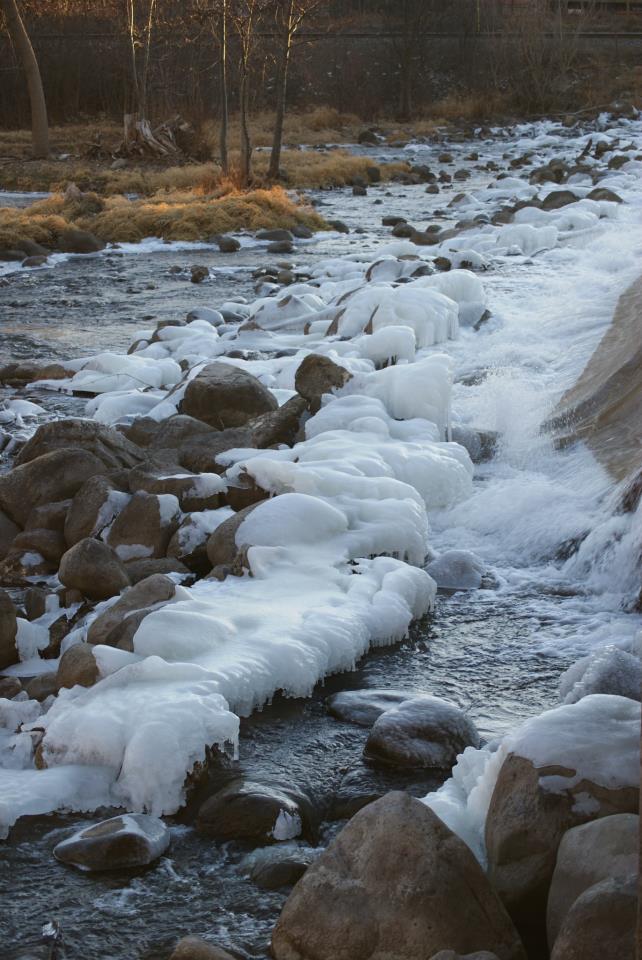
a photograph by Sonja Bingen, our daughter
by Thomas Davis
“Well,” Paul was saying. “I’d as soon leave the pine.
That way I’d know the thing and have it out
Where everyone could see the what of what
And not be wondering about the truth
And whether it was just a tale or dream.
If eyes can see, then brains can know.”
“Well, I don’t know,” Pike said. “That tree’s so tall. . .”
“The country’s big!” Paul said. “Tall trees are tall.
But still, I’ve never seen the like of this!
What will they say a hundred years from now?
Especially if it’s written down and made
Into some type of news that’s history past.
‘Why, what?’ they’ll say. ‘A tree so tall that skies
And moon and stars and sun and even wind
Were forced to go around its soaring tall?
Come on! We future fools are not the fools
That built our future up on tales and dreams.
We used good mortar, bricks, and long, hard thought.
You’ll not put anything of fancy here.
We know the ways of nature and of man,
And neither one’s so tall.”
“Perhaps,” Pike said.
“But then the country’s not so big that trees
Can stand in way of lumber. Let’s bring it down.
No one can hear us but the wind and sky,
And even they don’t care for trees so tall.
One day a jagged branch will catch the sun
And tear a hole of night into its side.
We’ll seal our lips and send it cut in boards.
No one will write it down. No one will know.”
Then, with a shrug and nod, they cut it down.
Note: Originally published in Poetry Out of Wisconsin
Filed under Poetry, Thomas Davis
by Ethel Mortenson Davis
We have all been slaves
and rich men.
We have run like the salmon
have run
with our freedom gone.
Be it red man, black man,
yellow or white,
we have all
been prisoners on this earth.
We have all
been free men.
And now the brightest star
in the east
says,
“Get on your pony
for the one last ride
before the dark.”
Filed under Ethel Mortenson Davis, Poetry
Two Tuscan pirates seized sweet Bacchus fast
And with a shout of heady, lusty joy
Hauled him away to vineyards where slim asps
Were in the pirate’s blood and bones employ.
They said that they had earned wine’s sweetened fruit
That only Bacchus could with skill distill,
And they would have it though the awful brute
Of night descended with its anger singing shrill.
Sweet Bacchus let them bind him head and foot.
He let them hold his form inside their hands.
He brewed their liquor from the grape’s sour root
With parsley, thyme, and scabious grown in sand.
But when the pirates woke sweet Bacchus was gone,
And they were fishy dolphins senseless of the dawn.
Filed under Poetry, Thomas Davis
by Ethel Mortenson Davis
This morning,
when we saw a cedar forest
whose trees seemed
as if they were from another world,
we saw a child’s tale—
witches and goblins hiding
behind every tree trunk
on the soft fallen cedar floors.
Since we have moved
to this land of lakes and forests,
my body has moved,
but not my spirit.
It is still circling,
soaring in the sky,
keeping from lighting,
not sure whether
it will land
like
the Sandhill Crane
this morning
circling the marsh,
not lighting,
appearing to be lost.
Filed under Ethel Mortenson Davis, Poetry
by Thomas Davis
King Rotten picked a bone out of the air!
The ivories tickled white with music wild!
Gold flashed and slid within the living room
As fingers pumped and fingers danced and flew
And smiles flowed wine, and feet rugged up the floor!
King Rotten graveled down into his throat.
Queen White bird-thrilled into a belting song!
Prince Rotten grinned his legs too loose for joints
As Captain Jack peered through his windowed soul,
And Snuffer shuffled snuffling through the songs.
And then, as evening swirled her starry dress,
And Rotten grumbled at his puckered lips,
And Queen White sang of wanting fancy shoes,
The bone fell golden to the night’s tired floor,
And ivories danced until they danced no more.
I sat in silence, wrapped in jazz’s womb—
The music died; the silver silence mooned.
Originally published in Wisconsin Trillium.
Filed under Poetry, Thomas Davis



 fourwindowspress