Category Archives: Poetry

Northwest Indian Mask — Poem: The Haida

a pastel and poem by Ethel Mortenson Davis

The Haida

The Haida left
the Northwest to come
to the Chicago Field Museum
to bring home their ancestors;

They were gone
for over one-hundred years,
stolen from a village
and put into drawers.

The Haida made button blankets
and round-cornered cedar boxes
painted in their rich
black and red symbols
in which they would place
their family remains
and bring them peace.

The Haida asked
the Chicago Field Museum
if they would also return
their family totems
and masks and other artifacts.

The Museum said,
“We’ll think about it.”

The Haida copyright © I Sleep Between the Moons of New Mexico, 2010.

14 Comments

Filed under Art, Art by Ethel Mortenson Davis, Ethel Mortenson Davis, Poetry

12. Weaving and Dragon Song

by Thomas Davis

Ruanne sat by the small triangle window,
The morning light a comfort past the storm.
She pumped the small wood loom and fed the strands
Of hair from mountain sheep into the shuttle,
Her hands in constant rhythm as she wove
Each row of heavy cloth into a rug
That metamorphosed howling winds and clouds.

She tried to concentrate upon the wisdom
Of Selen who, upon her loom, had woven
The weaving of a man and woman’s flesh
So human love could populate the world,
But all her efforts skittered like the beads
Of bear grease on a blazing, black iron pan.
Thoughts turned to images: Ruarther caught
By madness, storming from her life to wilderness,
Snow fields a glittering in morning light.

A knocking broke into her reverie.
She deftly tied the weaving so the row
Of gray and blue would stay in place for later,
Got up, and greeted Reestor at the door.
The old man looked pale, weary in the light,
His deep eyes ringed below white eyebrows sweeping
Toward white hair that covered half his forehead.
She smiled and stood aside to let him stomp
Into the cottage, cold around him biting
Into the room warm from the morning fire.

“You’re early for your rounds,” she said, her sadness
Surprising her inside her too soft voice.

Inside his heavy coat he looked more like
A bear than just a man, she thought. A wildness clung
To all the men who hunted for the game
That let the village live through winter storms.
She wondered if she ought to leave her cottage
And make the journey to the nearest town.
Ruarther was the one who’d kept her here.

But now? She smiled as Reestor growled as if
He truly was a bear. He shrugged his coat
Off shoulders strengthened by the years he’d spent
Outdoors before they’d made him village leader.
He walked toward the fire, put out his hands,
Then turned to look into her dark green eyes.

“I saw my father and my brother die,” he said.
“I didn’t live here then. I moved here later–
When Mother couldn’t stand the thought of Breenan.
Two dragons came upon the town all fire.
You seldom saw more than a single dragon then.
My father took his great long bow and hit
The older dragon, Pphhitin, in his one good eye.
The younger, Mmirimann, went wild
His breath so hot it fired the town’s wood roofs;
His claws sent dozens to their early graves.

“The great green brute not only burned our house,
But Mmirimann flung down upon my father,
The dragon killer, scorching flesh with fire.
He left the body black as smoky quartz,
So burned light seemed translucent through
The skull left bare without a shred of flesh.
The smell still visits me at night sometimes.
My brother tried to drive a metal spear
In Mmirimann, but didn’t have the strength.
The dragon swatted him away and speared
A broken rib into his young man’s heart.”

Ruanne stood silent, waiting. Reeston looked
At memories he’d long ago suppressed.
He suddenly looked up into her eyes.

“I don’t like kings,” he said. “The rich men live
Rich lives while those of us who find survival
In places where the rich would never live
Develop bonds much stronger than privation,
But Clayton’s Peace has given us good lives.
No human, or a dragon’s, died from war
For nearly all the years I’ve lived. But now…”

Ruanne still did not speak, but waited, spirit
So taut it seemed as if she ought to scream.

“We see more dragons in the sky each year,”
He said at last. “They have evolved, and we
Are still the humans that we’ve always been.
Ruarther’s craziness will stir their hearts
And bring about rage we have never faced.”

Ruanne let out the breath she’d held too long.
She shook her head. “I know,” she said. “But what?”
She paused. “The witch’s daughter shouldn’t die.
The children in the village shouldn’t face
The rage of dragon fire and raking claws.”

Determined, Reestor looked at her. “You know
The Dragon Songs,” he said. “You’ve heard them sung
Inside your head. You have to let them know
Ruarther’s left our village, lost his mind…”

“I’ve never said I hear the songs,” Ruanne said softly.

“I see it in your eyes, the way you shine inside,”
The old man said. “I’ve lived too long a life.
I hardly sleep, but still, you’re like the witch’s child.”

His words struck like a blow. She was a witch?

“Ruarther’s left me all alone,” Ruanne said.
“I’ve loved him since we both were children… babes…”

“He’s gone, Ruanne. You’ve got to let him go.”

“I’ve never spoken to a dragon, never…
They’ll never answer me… they’ll never hear…”

“You’ve got to try. The children don’t deserve
To die because Ruarther caused a war
That humans cannot hope to ever win.”

Ruanne escaped from Reestor’s burning eyes
And looked at where she’d sat upon the loom.
She shook her head. What could she really do?
She said a silent prayer to sagacious Selen.
She’d always forced the dragon’s songs away.
She was her mother’s child, not witch’s sister.
She’d known the mountain witch, but never once
Felt like they had a bond of flesh or blood…
She looked at Reestor, panic in her eyes.
She talked to dragons, villagers would drive
Her into wilderness, hate’s refugee.

The village children couldn’t die, not if
She had abilities that might protect them.
The old man looked past eyes into her heart.

Audio of Weaving and Dragon Song

Note: This is the twelfth installment of a long poem. Inspired by John Keats’ long narrative poem, Lamia, it tells a story set in ancient times when dragons and humans were at peace. Click on the numbers to reach other sections, or go to the Categories box to the right under The Dragon Epic. Click on 1 to go to the beginning and read forward. Go to 11 to read the section before this one. Click1 13 to go forward to the next section.

10 Comments

Filed under Poetry, The Dragon Epic, Thomas Davis

The Ministering

by Ethel Mortenson Davis

The dominant horse
acted queer:
Ran around in a circle
in his pasture,
finally resting near
a black clump
on the ground.

The black clump moved
every once in awhile.
It was the black dog
that ran wild
along our fence.
He had been shot
and had gotten
as far as the horses,
trying to get home.

What happened next
took my breath away.
The horse stayed
near the dog,
nuzzling with it’s soft lips,
going over and over it’s body
for a long period of time
until there was no movement.

© 2010, I Sleep Between the Moons of New Mexico

16 Comments

Filed under Ethel Mortenson Davis, Poetry

The Tree, Desert, Iris, and Progress

by Ethel Mortenson Davis

The Tree

Everything depends
on the apricot tree in bloom
across my neighbors fence—

A tree of butterflies!

Desert

The cornflowers are gaining
and soon will be in bloom.
Where are the rain-showers
of spring?

Iris

Cold nights
catch us off guard.
Will the iris
lose its life again?

Progress

Progress
is the budding branch,
the Painted Ladies
warming their wings
on my garden wall.

9 Comments

Filed under Ethel Mortenson Davis, Poetry

Sonnet 42

by Thomas Davis

Back in New Mexico the monsoon rains
had turned the desert green. Massed sunflowers blazed
with purple bee balm in the fields, the stain
of colors so intense there was a praise
of living in the vibrancy exploding
across a landscape barren, dry, the earth
so sterile that the thought of burgeoning
into a garden seemed a cause for mirth.
We walked in beauty like the Navajo
and thought about our son and how his eyes
would never look again into the glow
of fields of flowers, see the flight of butterflies.

The moment that that thought occurred to me,
I stopped. How can this be reality?

Note: This was written just days after our son’s death in Poughkeepsie, New York.

18 Comments

Filed under Poetry, Thomas Davis

April Spring

Photographs of Spring by Sonja Bingen, our daughter


April
a poem by Ethel Mortenson Davis

April on tossed hair,
in trees,
across the paths and grass
with branches stuck in seas of sky,
comes,

and
nowhere
is the snow
that covered us
and protected us,
but now
green
pushes up,
and
i
hold on
a moment like bark
and hear

a swinging down
out of trees

and
i see
your surprised
face
when
the earth jumps up fast to meet your legs.

17 Comments

Filed under Art, Ethel Mortenson Davis, Photography, Poetry

11. The Dragon’s Conclave

Ssruanne’s claws touched the ledge. The summons came.
She did not hesitate, but walked toward
The tunnel that would lead into the mountain.
She felt the gathering that moved before
Her through the caverns, tunnels, endless caves.
The movement of the mountain dragons seemed
More powerful than any storm the world
Has borne throughout its endless history.

She blanked her mind from thought and dream.
She hardly saw the other dragons as she joined
Into a stream of colors walking through
The ghostly lights the young ones mined from veins
Of crystal near the mountain’s granite cliffs.
The thunderous noise of dragons walking through
The tunnel’s passageways hummed through her bones.
The young girl’s eyes kept flickering and shining
Inside her consciousness. It made no sense,
But in her blood she felt the young girl’s heart.

The dragons parted as she walked into the cavern,
The sea of necks and spines, the glittering of eyes
Electric as a thousand lightning bolts.
Mmlynn’s bright eyes watched as her mother walked
Into the storm of fear surrounding her
And flinched to see her mother’s absent eyes.
Her mother looked as if her nightly dreams
Had entered day and burned with unwilled fire.

Ssruanne walked up toward the round, black dais
Where nine huge elders sat, their whirling eyes
Upon her as she did not hesitate,
But climbed the nine huge steps to tower over
The conclave’s rumbling, restless energy.
Upon the dais she turned to dragons she
Had known from when she’d quaked inside her egg.
She was the oldest. Still, the nine had lived
Through years of war with humans, then the moment
When dragon isolation ended deep
Inside this cavern in the mountain’s heart.

Old Mmirimann looked deep into her eyes,
His dark green eyes a swirl of radiance.
He turned his head toward the dragon sea.
Ssruanne’s eyes swept toward the ceiling where
The spoils of other ages were embedded
In melted stone, then looked down at the silence
That had descended as bright dragon eyes
Stared in their thousands at the place she stood.
She felt the bristling of thought and fear inside
The minds behind the eyes, the wondering
That after all these years her dreams were powerful
Enough to bring them to this spirit place.

“You’ve dreamed. We’ve felt the prophecy of dreams,”
Old Mmirimann said, thundering in silence.

Dread rose like bile into Ssruanne, her hearts.
She felt the child inside the cavern, saw her hands
Weave light as if the light was more than light
As boundaries between the universes
That could not ever bridge were bridged and songs
Not of this world were echoed from the past
And future in repeating symphonies.
Her thoughts flowed out of her into the thoughts
Of every dragon there as long necks swayed
In rhythm to the storm her thoughts had made.
A moan rose from the gathered dragons strong
Enough to tremble rock inside the mountain.

Dismayed, Wwilliama, standing next to where
Old Mmirimann’s eyes whirled emotions dense
With fear into cavern’s echoing,
Cried out, “the human girl must die!” as males
Throughout the cavern roared assent and rage
The way Mmlynn had said they would the night
She’d forced Ssruanne to tell about her dreams.

The girl’s blood beat inside Ssruanne’s two hearts.
The girl won’t die, she said inside herself.
Her thought had power like the power burned
Into the light that flowed from young girl’s hands.
It cut into the rage and silenced it.
The nine old dragons looked at her, eyes shocked.
No one had ever silenced dragon rage
In all the ages dragons had existed.

“Your foolishness will bring about our doom.”
Ssruanne was shocked to hear her voice ring out
Outside the working of intent or will.
The voice of prophecy was in her words.
“New days are coming on all dragonkind.
The human girl is part of powers stronger
Than fire and claw. She will not, cannot die!”

The silence was intense, devouring thought.

“The males cannot accept your dreams,” Sshruunak,
The leader of the young males boomed into the silence,
His great voice raw and ugly in the cavern.
Black scales shined power from his whirling eyes.
His neck was rigid challenging Ssruanne.

“The girl is one of us,” the voice of prophecy
Said, slicing once again through strength and rage.

Sshruunak’s great head swayed, fear replacing rage.
He tried to speak, but could not speak, the geas
Of prophecy so powerful it shattered
His will and forced a silence in his hearts.
He forced his legs to move and bumped against
The male beside him, moving back toward
The tunnel that would let him find a ledge to leap
Into the air and stretch his reason into wings.

A movement vast as nightmares stirred throughout
The conclave, shattering community, the dragon
Society’s great unity a chaos
Of fragmentation, swirling individuals
Into the fears in ancient enmities.
The tunnels filled with dragons fleeing prophecy.

Dismay rose up into Ssruanne and echoed.
She felt the pain of times long past as steel
Brought death past scales to dragon flesh.

What was the human girl to her? she cried.
She was a dragon, not the mother of a child.

Audio of The Dragon’s Conclave

Note: This is the tenth installment of a long poem. Inspired by John Keats’ long narrative poem, Lamia, it tells a story set in ancient times when dragons and humans were at peace. Click on the numbers to reach other sections, or go to the Categories box to the right under The Dragon Epic. Click on 1 to go to the beginning and read forward. Click on 10 to go to the tenth section. Click 12 to go forward a section.

9 Comments

Filed under Poetry, The Dragon Epic, Thomas Davis

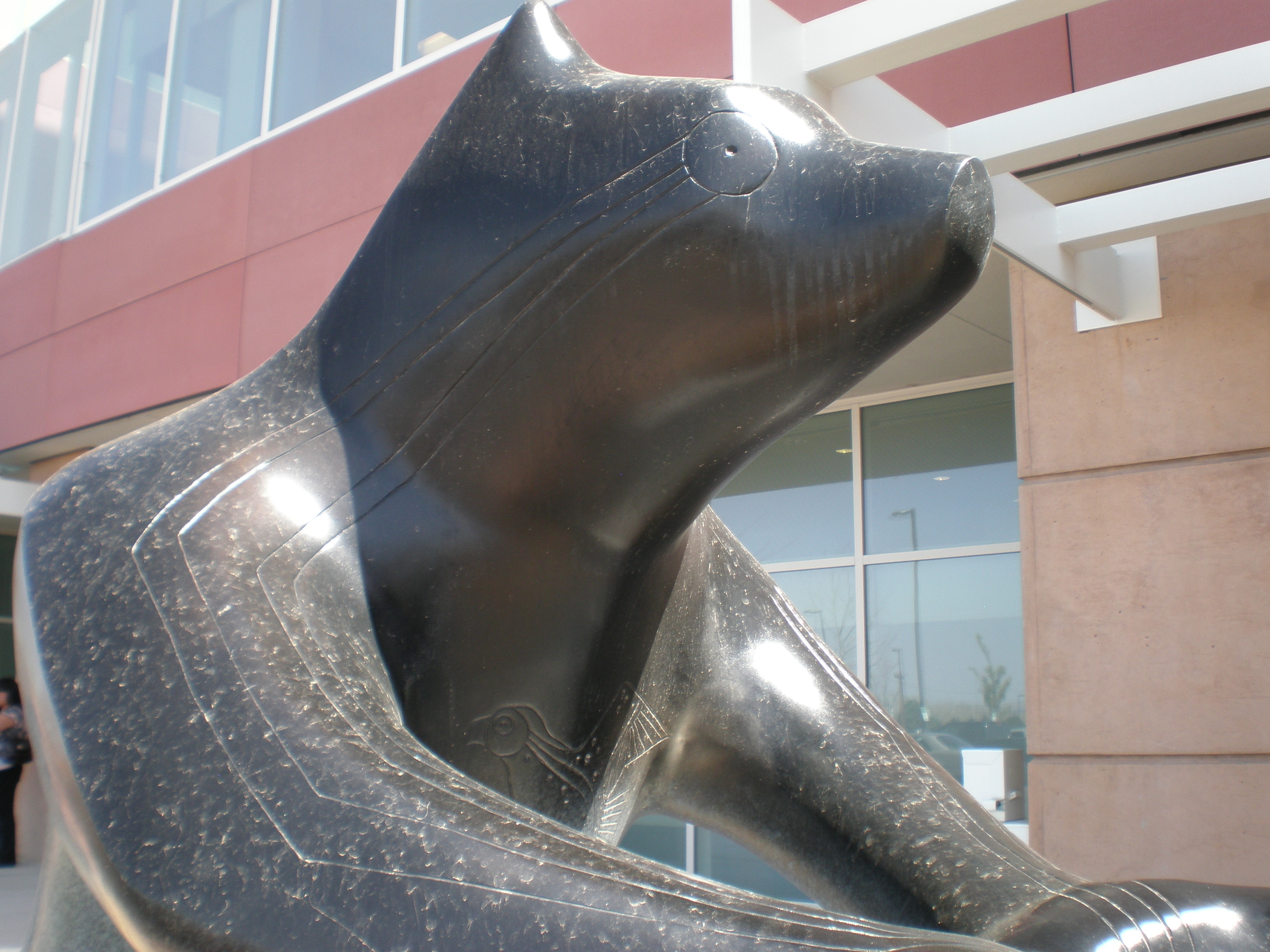
Healing Bear

a photograph and poem by Ethel Mortenson Davis

Mudjekeewis:

El Oso de Salud or “the healing bear” is the symbol of the UNM Cancer Center and a Native American totem of power, health and protection. The bear, by the sculptor Gene Tobey, is the animal most closely associated with mudjekeewis, the spirit keeper of the west and source of responsibility, teaching, leadership and healing. It represents the desire to serve New Mexicans whose lives have been touched by cancer with strength, courage, grace and great ability.

Healing Bear

I am the healing bear.

I will lick you
all over
from head to foot.
I will take
the bad smells out
of your fur.

I will bring you
up out of the labyrinth
and will heal you.

I will show you
the face of your child
so small you can
hold it in your hand.

I am the healing bear,
and I will heal you.

© 2010, I Sleep Between the Moons of New Mexico.

19 Comments

Filed under Art, Ethel Mortenson Davis, Photography, Poetry

Sonnet 41

by Thomas Davis

We kissed his forehead, yellow, cold, inert,
sobbed our goodbyes, left his body, drove
to Poet’s Walk above the Hudson, hurt
beyond expression, where, on hills, small groves
of ancient trees are interspersed with fields,
a place where, Kevin said, he liked to go.

And as cremation’s fires consumed, annealed
his spirit to our spirits, as the glow
of July’s sun warmed flesh too numb to feel,
we walked where he had walked and tried to find
our balance in a world turned sad, unreal—
our son was gone, his smile, his wondrous mind.

And as we walked the wings of butterflies,
black mourning cloaks, danced through the summer skies.

At the University of New Mexico Cancer Center in Albuquerque, where I am now being treated once a week, a healing bear greets patients as they enter the building. Marked with ancient symbols, shining black in the sun, Ethel and I stand before it every time we come to the Center. The major question in my mind at the moment, one that I cannot shake, is, why am I surviving my bout with bladder cancer while Kevin, only 28 years old, did not survive? I would have given him my life without a thought if he could still be present, thinking about butterflies that were such a constant, powerful symbol to him from the time he was a child to the day of his death when, as Ethel has written in a powerful poem not yet posted, a butterfly visited his hospital room so many stories up in the middle of the city. I understand there is no answer to such a question, and I am deeply grateful to have more years with Ethel, my children, and grandchildren, but both Ethel and I miss our son. This sonnet was written after our visit to Poet’s Walk Park on the Hudson River in New York. Ethel has also written about our experience there. After this moment we flew back home to New Mexico. Just over a year later we discovered my cancer. One of Ethel’s many photographs of the healing bear is below as a symbol of survival and strength in the face of devastating tribulation.

photograph by Ethel Mortenson Davis

31 Comments

Filed under Art, Essays, Ethel Mortenson Davis, Photography, Poetry, Thomas Davis

Orion

by Ethel Mortenson Davis

In the early morning
Orion is already setting
In the western sky.
I follow it,
getting closer
to the spring equinox,
pointing north past
the north star.

The north,
where spring first appears
in bunches of wild leeks,
the first green in the forest,
dug up by deer
for their delectable bulbs.
Then a carpet of
spring beauties and anemones follow,
flooding the forest floor.

It was there
where you laid your head
in a bed of wild flowers.
The fiddle-head ferns
were just unwinding
and in a month
would reach our shoulders.

It was there,
where you wore
bells on your hips
so as not to surprise
the black bear with cubs
and the gray timber wolf
on his trek across the land.

Now Orion sets in the southwest,
pointing toward spring.
I will plant corn this year,
perhaps on the western side
of the garden.

© 2010, I Sleep Between the Moons of New Mexico.

20 Comments

Filed under Ethel Mortenson Davis, Poetry