Category Archives: Essays

Hummingbirds in New Mexico

When we lived in Continental Divide, New Mexico, one of the many glories of the area where we lived at the foot of the Zuni Mountains were the great hummingbirds that were in the area from spring to fall. Sometimes in the pinion trees outside our house, hundreds of hummingbirds gathered and then dive bombed, perched, and hovered around the red feeders that Ethel filled multiple times a day. Gold, green, brown, and red flashed in the special New Mexico light as a celebration of life and living darted here and there all over our yard and into the field where horses were grazing out the back window. Sometimes Ethel would go out to water the wildflower garden she kept going until winter set in through the hottest of summer days. The hummingbirds didn’t seem to have any fear of her, but buzzed within inches of her head as they dipped in and out of the spraying water. The high desert is so dry so much of the year, and you would think that life had to have an almost impossible time surviving. Yet, the hummingbirds, beautiful and raucous, were only part of what was present in this unbelievably beautiful place with its small mountains and soaring red cliffs. Birds, elk, mountain lions, mule deer, antelope, jack rabbits, and a host of other life survived among the pinion and juniper forests that spread out over the land. Sometimes we’d even have a stellar jay landing beneath our apple trees, its dramatic crown and blue fire startling as it strutted in the small shade. This was hummingbird heaven–a place where we could sit in our living room as a fiery sunrise blazed on the eastern horizon and watched dawn glint off hummingbird wings.

3 Comments

Filed under Essays, Ethel Mortenson Davis, Photography, Thomas Davis

James Janko Review Ethel Mortenson Davis’s Newest Book, The Woman and the Whale

James Janko is one of the most significant authors in the United States. His newest novel, Wired, is on pre-order now. I’ve ordered it. When he wrote to me telling me that he thought Ethel was one of the most important poets in the world, he directed me to a review he’d written about her latest book of Poetry, The Woman and the Whale. I couldn’t agree with him more. I think a superb writer recognizes superb writing and is a wonderful judge of what he reads.

1 Comment

Filed under Essays, Ethel Mortenson Davis, poems, Poetry

The Metaphors in “The Healing Journey” by Ethel Mortenson Davis

Thomas Davis

I don’t know that I have ever written anything about one of Ethel’s poems. She’s my wife, after all, and my love for her is as deep as it was the day we were married over 57 years ago, but I thought I’d write on the Easter at least a note about this particular poem. It’s not the only poem she’s written that deserves an essay, of course. You could write a book on the poems that are meaningful and/or powerful enough to deserve commentary.

“Healing Journey” is about a particular place, at least on the surface. Ethel was raised on a dairy farm not too far from Wausau, Wisconsin, and near her parent’s farm is a park called Eau Claire Dells. It’s a beautiful place with black stone, waterfalls, a small canyon, and the deep woods of Wisconsin’s northern mixed hardwood conifer forest. Large maples, basswood, and other hardwood trees are mixed with a scattering of conifers.

The poem starts out with a rich description of the Eau Claire Dells, “the glacial forest” on a warm and humid day. The poet is climbing the high trail that leads to a bridge that spans the highest part of the small canyon that has a river in its depths, “black granite waters.” As daylight fades, “the moss-covered boulders looked like giants strewn/by some ancient glacier eons ago.” At this point, the poem takes on its metamorphic character. Time suddenly encompasses the ancient world as well as the present-day world. In the present, “the cold air rose around my legs” and “Water trickled down everywhere — through the moss carpet/thick with the red mushroom.”

The strong, specific nature of image are characteristic of all Ethel’s poetry, of course. The sense of water in the river and trickling “down everywhere” gives us a feeling of richness, of a different place where time is stretched out while still being as fluid as water, as the “everywhere” notion that is so powerful in this particular stanza. Time becomes a landscape, preparing us for the mysticism that is at the heart of what is to follow..

What is to follow is encompassed in “I had come here before, hoping to resolve a riddle,/but now I had a disease within my body and needed help.” The poet is not well, and the disease she has is troubling her, is a riddle she feels like she must solve. She needs help.

After this line the poet comes to a bridge over the canyon. The metaphors are obvious here. There are dark waters below as they run through dark granite. A bridge takes from one side to another. A canyon in a lot of Ethel’s poetry is a symbol that has to do with a depth that must be crossed. Granite is an age-old symbol of permanence, of rock the wears away only slowly over the ages, so the poet has come to a transition over the darkness of the deep (of death? Of the darkness in the world?) while she is ill, looking to cross over from all she is experiencing.

In these troubled times, it is not difficult to see the poet as a symbol for all humanity, ill, facing a chasm where dark waters are rushing over the dark river that is always next to its journey or below its passage.

The description of the bridge, “. . .black and strong,/made with spaces between the floor planks wide enough/to see the great height at which I was,” allowing the poet to see the river as “a black granite ribbon glistening in the dim light,” is a comforting image. The bridge is strong even if it’s boards are spaced wide apart and won’t collapse if the poet steps from the path she is in on to brave the crossing she intends to make.

Then she sees across the bridge in a clearing in the forest, the wilderness, “a large crowd of people./Their faces were as warm as their hands.” The symbol of hands is interesting here. A hand is also a bridge between human beings. We reach out our hand to help someone that needs that reaching out. In this cases the crowd of faces is also reaching out as the poet crosses the bridge, the chasm, and the dark river.

Then another character enters into the poem. There is no transition here. The nightingale doesn’t appear in anyway. Instead, it whispers: These are people that have helped you/In some way throughout your life.” In classic literature the nightingale is symbolic of beauty, love, and melancholy. It’s known for its beautiful song, which has been linked to spring, mourning, and love throughout history. In the contemporary world it often represents the muse or, sometimes, spiritual purity. I suspect Ethel is using the metaphor to represent the muse inside her without losing the older use of beauty, love, and melancholy. Crossing the chasm and the dark river is not celebratory. It is a spiritual journey that has a sense of purity inside it.

After seeing the people who have helped her during her life, day turns to night, but this is not the night of the dark waters in the river below the chasm. She turns around and crosses the bridge, and “the moon was beginning to shine on the water,” but not only in the water, but also in the poet. She has crossed the bridge and now is crossing it again, changed, especially in her spirit, in a significant way.

In that crossing, the poet “felt as if the sun was beginning to rise.” The dark waters and the chasm still exist, but as in the lines of “Bridge Over Troubled Water” by Simon and Garfunkel, crossing the bridge has eased her mind–as well as her spirit.

“Healing Journey” is a quintessential Easter poem. Many people reading Ethel’s poems see only the surface created by the powerful, often beautiful, images she evokes. However, like most great poets that deserve a wide audience, there’s often more than one way to read her poems. In a recent review of her latest book, The Woman and the Whale, Estella Lauter, the poet and critic, said that many of her poems are metaphors, and there is truth in that statement.

The resurrection from the fear/anxiety of illness, whether it is in a single human being or humankind as whole, to the spiritual purity in experiencing the whisper of the nightingale (whether it is a muse or spirituality–and what is the difference between these?), sings into any reader who looks this deeply into this poem.

4 Comments

Filed under Essays, Ethel Mortenson Davis, Poetry, Thomas Davis

Moss Piglet, a Literary Journal

Ethel and I just received the January issue of “Moss Piglet” today, and boy are we excited! Ethel has three pastels and two poems in this issue, and I have two poems. I don’t know how many of you are familiar with the “Moss Piglet,” but I have a recommendation for you. Go to the “Moss Piglet” website, order a copy, and then submit a poem as soon as you possibly can.

Neither Ethel nor I knew about this publication until a couple of months ago when Ron Czerwien, the President of the Council of Wisconsin Writers, mentioned that we ought to consider submitting to it, that he was absolutely blown away by the publication with its full color art, superior design, and great poetry. Following Ron’s advice always seems like a good idea, so Ethel and I sent in some poems. Ethel decided to send in three pastels as well.

We were amazed when we got almost immediate acceptance emails from John Bloner, the Editor. Then, curious about what the publication was about, I ordered a three month subscription. Like Ron, I was blown away when our December issue showed up in the mail. This is maybe the most beautiful literary journal I’ve ever seen.

I’ve put together three magazines/literary journals in my lifetime. Richard Brenneman, today a Boston poet, and I did “The Rimrock Poets Magazine” in Grand Junction, Colorado when I was a young college student. Then I became the Associate Editor (or something like that) of “The New Quiver,” which won All American honors while I was at the University of Wisconsin-Oshkosh. Working with the Shawano County Arts Council I worked with Russell Ferrall, the great Wisconsin poet who was a pioneering presence in the Wisconsin Fellowship of Poets, to put together “Wisconsin Trillium.” I’ve also published two major poetry anthologies, and Ethel and I have put out a small library of books with Four Windows Press. This doesn’t count the time that Ethel and I acted as Editors for one issue of “Bramble.”

What I want to say by saying all of this is that both Ethel and I understand how challenging publishing can be. It is a slog, working ceaselessly to find good content and then putting it together into a package that is worth looking at and reading. The truth is that “Moss Piglet” is a home run. It’s a blazing star at its beginnings in a star incubator shining out into the glory of the universe.

I urge everyone reading this post to get a copy and submit their best work to it. This is a publication worth supporting with a subscription so that John Bloner doesn’t get tired and stop producing what is a monthly series of masterpieces.

A moss piglet, by the way, is an animal, a Tardigrade, an eight legged, segmented micro-beast that is almost indestructible. It can even survive in the vacuum of space for extended periods of time.

4 Comments

Filed under Essays

In Memory of Richard “Snuffy” Dodge

Poem by Ethel Mortenson Davis, essay by Tom Davis

Reserved

Look at

the cedar grove

near the edge

of the lake.

It looks like

a bed between

tree trunks.

Soon I must

take my rest

on the soft coverlet

of leaf litter,

a place reserved

in my name.

I woke up this morning, after a somewhat restless night, realizing what a blessed life I have been privileged to live.  Richard, Snuffy, Dodge, a Menominee code talker who helped Navajo code talkers get from place to place in China and Southeast Asia during World War II as they found Japanese forces, traveled behind the blanket earlier this week, and his passing at the age of 94 has caused me to think about how many truly extraordinary people I have known.

I met Snuffy in 1973 when I was working as an English and History teacher at the Menominee County Community School on the Menominee Reservation in Wisconsin.  One of the first of the Indian controlled schools that later morphed into the Bureau of Indian Education’s contract school system that funded tribes to operate their own school systems, the Community School was a seat-of-the-pants effort that I suspect both Snuffy and his highly intelligent wife Paula did not fully see as the history of Menominee education.

When the Menominee County Education Committee, however, led the effort to create the Indian controlled school district that came to be known as the Menominee Indian School District, Snuffy got elected to the first school board.  Although I wanted to work at the new high school, the Superintendent, whom I had helped get the job, did not hire me.  Ironically, that led to me getting to know Snuffy better than would have happened otherwise and helped enrich my life.

The job I got after failing to get a teaching job at the school district was as the first Director of Planning for the Menominee Restoration Committee that was restoring the Menominee Nation after the disastrous termination policy that had decimated the tribe’s fortunes during the Dwight Eisenhower presidency.  In that job I started working extensively with Gordon Burr, a Stockbridge tribal member, who was also working closely on Comprehensive Education and Training Act (CETA) efforts with all of Wisconsin’s thirteen tribes.  Snuffy was also working closely with Gordon, and the three of us started an effort to help first Menominee, then all of Wisconsin’s tribes, for the next several years.

After a year working for Menominee, I joined Gordon to work at the Great Lakes Indian Tribal Consortium, and Snuffy, I, and Gordon raised millions of dollars in CETA, Economic Development Administration (EDA), State of Wisconsin, and Community Development Block Grant (CDBG) funds for tribal projects.  We traveled together a lot, working at the state legislature in Madison, developing projects on various Reservations, and writing what seemed to be an endless stream of proposals.  The truth is that Snuffy and Gordon were both gifts to Wisconsin Indian tribes during those years, and the three of us, and our families, developed close bonds.

The stories I can tell about Snuffy are pretty close to endless.  One of my favorites was when he was in Chicago working with the Regional EDA Administrator who was also named Dick Dodge.  He was in EDA Dick Dodge’s office talking to him about a project he and I were working on when the administrator got an “urgent phone call.”  With Snuffy sitting in his office, the EDA Dick Dodge’s eyes got really big, and he bellowed out, “They did what?”  It turned out that a Michigan tribe had developed a hog operation as an economic development project, and one of the project’s administrators had got the idea to fund a tribal feast, and he’d managed to provide the breeding hogs for the feast, destroying the project.

If that wasn’t an unfortunate time for a representative trying to get funding for an economic development project for a Wisconsin tribe to be in that office, I don’t know what unfortunate means, but Snuffy always knew how to smile and laugh and get people off their high horse into a serious negotiation, and the upshot of the story is that we got that grant funded.  EDA Dick Dodge was not pleased, but he was working with Snuffy Dick Dodge, and surely that meant that things would work out okay.

The most important project Snuffy and I tackled together was when the Ho Chunk in Lake Delton wanted to take control over the Stand Rock Indian Ceremonial where they had performed for decades so that they could get the economic benefit for what they had made possible.  We worked with Dells Boat Company and other business leaders in the Dells, as well as the American Legion that had originally started up the Ceremonial, and helped to make that happen.  The Neesh-La Indian Development Corporation that we worked with Alberta Day, the President of the Corporation, and other Ho Chunk people from the area to create, is still operating successfully today.

There are simply so many stories.  During our travels Snuffy would always want to eat out at higher class restaurants where he could have a glass of Chablis, and Gordon preferred down-home cooking at what were in essence greasy spoons.  The battles always put me in the middle, although neither one of them ever got angry at the other one or me when they didn’t get their way that day.  Snuffy always read the Wall Street Journal every day, stopping at a news stand when we were on the road so that he could check on the stock he was invested in and check up on the news of the day.  These are the small things that loom big when you look back and contemplate what has long passed by.

One of the most memorable times of my life was when Ethel, Paula, Snuffy, and I took a trip to Atlanta, GA one year over the Smoky Mountains, enjoying each other’s company.  We were doing the Neesh-La project at that point and trying to learn more about the tourist industry and how it worked.  We learned a lot at the convention we attended, but we enriched all our lives by making a magical trip together.

No short essay is going to illuminate any extraordinary individual’s life, of course.  Richard Snuffy Dodge was a delightful human being who was complex and intelligent and forward-thinking all at the same time.  When Ethel and I visited him and Paula for the last time, we talked about the past, and he gave me a long hug, even though he was already having trouble eating at that point, as we left their house in Keshena for our home in Sturgeon Bay.

As I said, this morning I woke up after a troubled night and realized just how blessed a life I have lived with Ethel, my children, and all the extraordinary people I have been privileged to have known.

2 Comments

Filed under Essays, Ethel Mortenson Davis, poems, Poetry, Thomas Davis

Major Anthology Released by Four Windows Press

Publisher:                   Four Windows Press, 231 N Hudson Ave., Sturgeon Bay, WI  54235

Distributor:                Ingram

Number of pages:      370

Price:                          20.95 Retail

Available:                   Through bookstores and online venues worldwide, including https://www.amazon.com/gp/product/0999007777?pf_rd_r=QNSVAP9MMMBZFHENZZEP&pf_rd_p=9d9090dd-8b99-4ac3-b4a9-90a1db2ef53b or https://www.barnesandnoble.com/w/no-more-can-fit-into-the-evening-thomas-davis/1138335652?ean=9780999007778

Web site:                    www.fourwindowspress1.com

Four Windows Press has released a major anthology of English-speaking poets, No More Can Fit Into the Evening, A Diversity of Voices.  The volume contains a healthy sampling of work from 39 poets from the United States, Great Britain, Canada, New Zealand, and the Netherlands. 

In the “Introduction” to the volume, the Editors, Thomas Davis and Standing Feather, both poets, say that “an early decision was made to invite poets either they knew about” from their years participating in multiple poetic communities “to submit ‘the ten best poems they had ever written.’” From the hundreds of poems submitted over 250 poems were included in the final publication.

Among the notable poets in the volume include Terence Winch, winner of the American Book and other awards; John Looker, an important British poet; Kimberly Blaeser, an Anishinabe poet with an international reputation who is a former State of Wisconsin Poet Laureate; Michael Kriesel, former President of the Wisconsin Fellowship of Poets, and James Janko, winner of the AWP Novel of the Year and other awards.

According to Davis and Feather, what they are hoping “as they bring this project to press is that readers might find themselves on a mesa top where grandmother junipers spread their branches out beneath a full moon, remembering poems that stuck in their spirit after this volume has been read. We are hoping they might have that experience in Door County, Wisconsin where Lake Michigan is tossing wild, white capped waves at the dark dolomite escarpment that runs through Door Peninsula, or maybe in the timeless moment when they are communing with Taliesin, the ancient Celtic bard, in a time before time as he chants beauty and the world’s beauty into the deep starlight of a Celtic night.”

3 Comments

Filed under Art, Essays

Tribal College History Podcasts Continue, No. 10

The latest podcast from the Tribal College Journal and Christine Reidhead about the tribal college movement has just been put up at https://tribalcollegejournal.org/our-history-memories-of-the-tribal-college-movement-podcast-10 In this podcast about the tribal college movement I talk about two legendary figures, Lionel Bordeaux, the Dean of Tribal College Presidents, and Martha McLeod, the founding President of Bay Mills Community College in Northern Michigan.

8 Comments

Filed under Essays

Review of Under the Tail of the Milky Way Galaxy

Carolyn Kane, the author of an award winning novel, Taking Jenny Home, a Professor Emeritus of English at Culvert-Stockton College in Canton, Missouri, just reviewed Ethel’s book, Under the Tail of the Milky Way Galaxy, for the Peninsula Pulse.  The review can be read here:

https://doorcountypulse.com/review-under-the-tail-of-the-milky-way-galaxy-by-ethel-mortenson-davis.

In the review Kane says that “Davis’ poems might be described as extended haiku because their images are sharp and spare, and because they contain the element of contrast that a reader should expect in a well-crafted haiku.”  It is a wonderful review.

Underthewaycover.jpg


3 Comments

Filed under Essays, Ethel Mortenson Davis, poems, Poetry

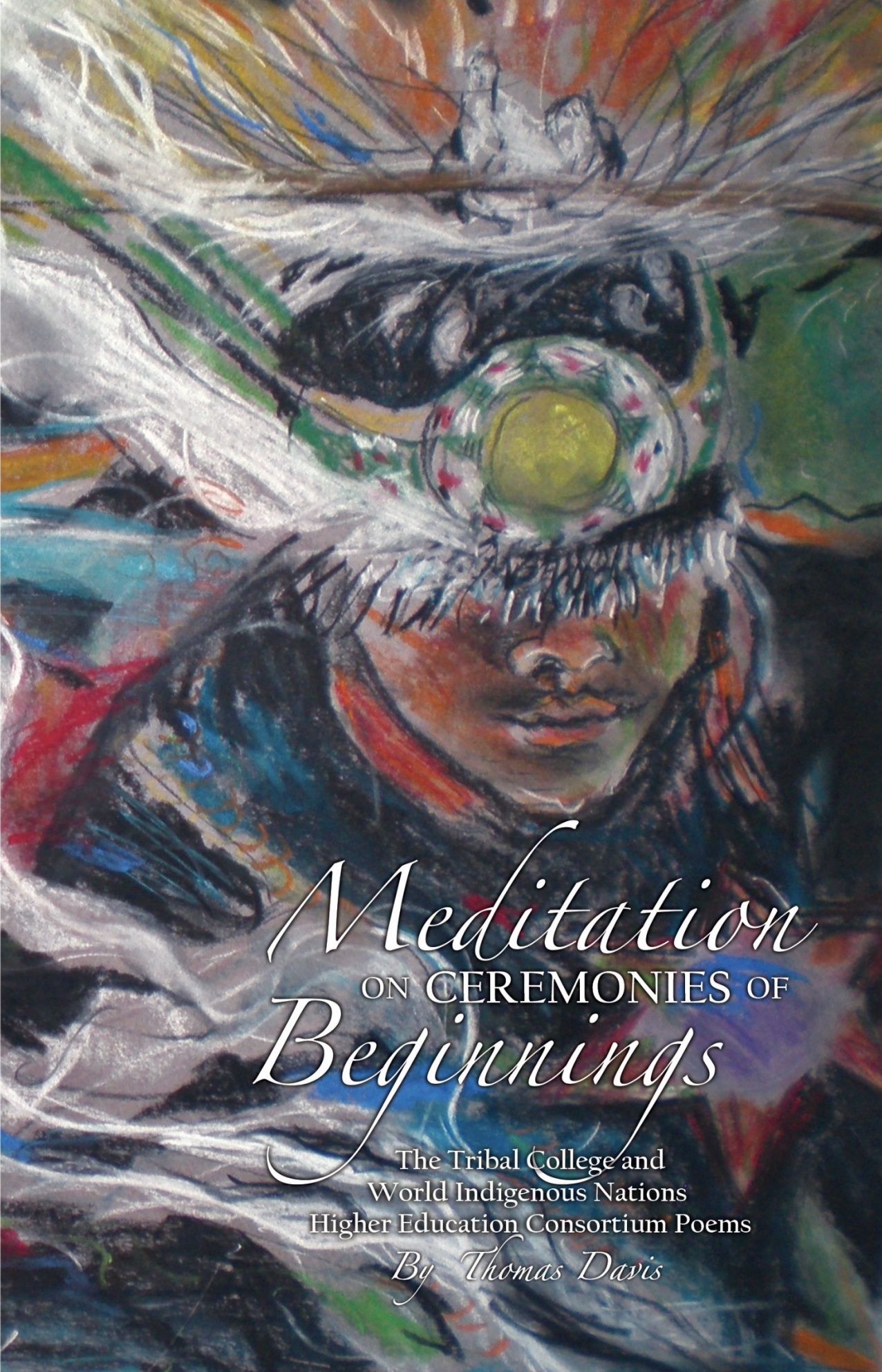
Meditation on the Ceremonies of Beginnings

I just signed a contract with Tribal College Press (TCP) for the publication of a book of poetry titled, Meditation on the Ceremonies of Beginnings.  In 1972 I graduated from the University of Wisconsin Oshkosh and found a teaching position at an alternative school, Menominee County Community School, which was one of the first seven school of the Indian controlled schools movement in this country.  It was through my association with Helen Maynor Scheirbeck, the greatest American Indian leader in Indian education during my lifetime, that I found out about the tribal colleges.

When Dr. Verna Fowler asked me to help her found what became College of the Menominee Nation in 1993, I started writing poems about the tribal college movement and its founding.  I have written a substantial number of poems over the decades, celebrating, mourning, living the tribal college dream of creating a new form of higher education driven by American Indian cultures and languages throughout the United States.

Most of the early poems were written during American Indian Higher Education conferences, or later, World Indigenous Nations Higher Education Consortium conferences, in the United States, Canada, New Zealand, or Australia.  I usually wrote them on scrap paper or napkins and then promptly gave them to whomever I was with at the time.  Luckily for me, Marjane Ambler, then Editor of the Tribal College Journal, prevailed upon person after person to save them and send them to her.  Later on, once a handful of the poems appeared in print, I stated saving them myself.

The poems tell a different kind of history about the tribal college and university and World Indigenous controlled institutions of higher education movements in the United States and worldwide.  I am grateful that Bradley Shreve and Rachael Marchbanks at TCP unexpectedly offered to publish the book.

This has been quite a year!  In the Unsettled Homeland of Dreams, my Washington Island historical novel about the black fisherman community that settled on the island before the passage of the Fugitive Slave Act that led to the Civil War, should be coming out in the near future.  Now Meditation on the Ceremonies of Beginnings.  I’m really going to have to do some marketing work.  I hope some of you might consider buying either one or both works.  I’ve certainly worked hard enough on both of them.

10 Comments

Filed under Essays, poems, Poetry, Thomas Davis

Review in Wisconsin People and Ideas

My review of Thomas Peacock’s first novel, Beginnings: The Homeward Journey of Donovan Manypenny, is in the latest issue of Wisconsin People & Ideas.  Peacock is one of the most important writers and thinkers about American Indian education in the country, and his wonderful novel, published by Holy Cow! Press (one of my favorite publishers), has “the resonance of truth telling” in its pages.  I highly recommend it to anyone interested in the deepness of native culture and how that deepness draws people into and back to the place where the universe began.

I am also pleased to be published in Wisconsin People & Ideas, the most important publication containing the best of Wisconsin culture and thought in the state.  The publication of the Wisconsin Academy of Sciences, Arts and Letters explores Wisconsin’s intellectual and natural environment with a substance that helps define the state’s true spirit.

My daughter, Sonja Bingen, tried to get the Academy to name me a Fellow, but that didn’t happen, so this publication made me especially feel good.  The magazine and the Academy is one of the best things about Wisconsin.

2 Comments

Filed under Essays