Tag Archives: death

Sonnet 45

by Thomas Davis

I name them: Sophie, Phoebe, William, Joe,
each one of them as individual
as early mornings in New Mexico
when shining light holds trees and land in thrall.
Joe, lost in circles only he can see,
and William, king of Legos, friend of friends,
Sweet Phoebe, bright as any sun, a sea
of light that’s always looking past the bend,
and Sophie, fledgling eagle nearing flight—
like William, first born, disciplined, and kind.

We’ve lost our son, and in our grief the blight
of memories assaults our days and minds,

but in our hearts grandchildren laugh and sing
and help us think we’ll know another Spring.

This is the last sonnet in the sonnet sequence I have been posting for the last several months. Kevin’s life (February 16, 1982 – July 23, 2010) was shortened by an unknown cancer that we only knew about for a few short weeks in June and July of 2010. Ethel and I traveled to Poughkeesie, New York to be with him during his last several weeks and was there during days of excruciating pain and small triumphs that ended in deep grief. The sonnets were mostly written as our beloved son lay dying as day passed day, and time’s march brought us, finally, to his death. They were written as my way of trying to deal with an impossible, unbelievable, unacceptable time. The last sonnets in the sequence were written after Ethel and I had returned to New Mexico.

Ethel has written extensively about this time too. The last poem she posted on fourwindowspress, “In the Night,” was written in a cancer ward hospital room. Some of her poetry foresaw the nightmare to come; other poems were written during Kevin’s illness. A few were written in the year and a half since we came home.

I hesitated to put these sonnets out for the wordpress world to see. Should you publish anything so raw and filled with horror and grief? In the end I am grateful I went ahead and started posting them. I am incredibly busy as Dean of Instruction at Navajo Technical College, all of us have responsibilities to our families, and wordpress can devour time, so I seldom answer the many many comments put on our blog. I have this need to try to say something meaningful, and that takes time, and if I spent that time responding to comments I would have no time to read other poets. That would make my life poorer. But the truth is that comments placed with love beneath each sonnet has been deeply moving. They have helped Ethel and I keep on keeping on, and though some days you wonder why we humans keep doing that, the answer is contained in words and voices that connect us to one another.

When this sonnet was written in August of 2010, I could tell the impulse to write sonnets about the sequence of events and emotions accompanying Kevin’s illness and death was waning as the inexorable demands of living kept dragging me through my days. When I sat down one evening and wrote it, I knew this was the last of the sequence, the reason, in the face of all our tragedies, we keep walking this good earth. A human life is not forever. We see sunlight for a day and laugh without realizing the joy we are experiencing, and then cancer or some other illness enters our lives, and we face the boundary we cannot see past. At that moment we have so little left. Pride and dreams of the future that have ticked out the clock of our lives mean less than they did before. Yet, the voices of those who have loved us and whom we have loved sound deep inside our humanity and become life’s reason, the meaning for who we have been and who we are at this moment.

I have been battling bladder cancer since it revealed itself this winter. My prognosis is positive, unlike Kevin’s, but this is a sobering time. Not only have we been with our son as he died, but my own mortality is as raw in my face as his mortality was as he slipped into a coma from which he never awoke. At such moments you worry incessantly about the closest people to you. You also wonder if you have left any legacy at all. You want to make sure the lives you have so deeply cared for are going to experience laughter that denotes joy they do not realize they are experiencing. Have you done enough? Has your life been honorable through your days? And you think about your father, who is gone, and mother, who still goes at the word, go; the love of your life; your now gone son; your wonderful daughters, and your grandchildren cusped on making themselves who they will become.

And inside your worry the New Mexico sun shines with the high desert’s magic, God’s magic, blackbirds sing liquid songs, you wake in the morning with your wife of 44 glorious years beside you, you know that you will talk on the phone to your daughters before sunset, and you hear your grandchildren in your head dancing through their prom night or chasing a kite bobbing high in a springtime sky, and you know that life is more precious than you have known and that when it is all over, you will know, in those last moment, that you have been loved and have loved. What else matters? What else truly means at the end of a long, glorious day?
24 Comments

Filed under Essays, Poetry, Thomas Davis

Sonnet 41

by Thomas Davis

We kissed his forehead, yellow, cold, inert,
sobbed our goodbyes, left his body, drove
to Poet’s Walk above the Hudson, hurt
beyond expression, where, on hills, small groves
of ancient trees are interspersed with fields,
a place where, Kevin said, he liked to go.

And as cremation’s fires consumed, annealed
his spirit to our spirits, as the glow
of July’s sun warmed flesh too numb to feel,
we walked where he had walked and tried to find
our balance in a world turned sad, unreal—
our son was gone, his smile, his wondrous mind.

And as we walked the wings of butterflies,
black mourning cloaks, danced through the summer skies.

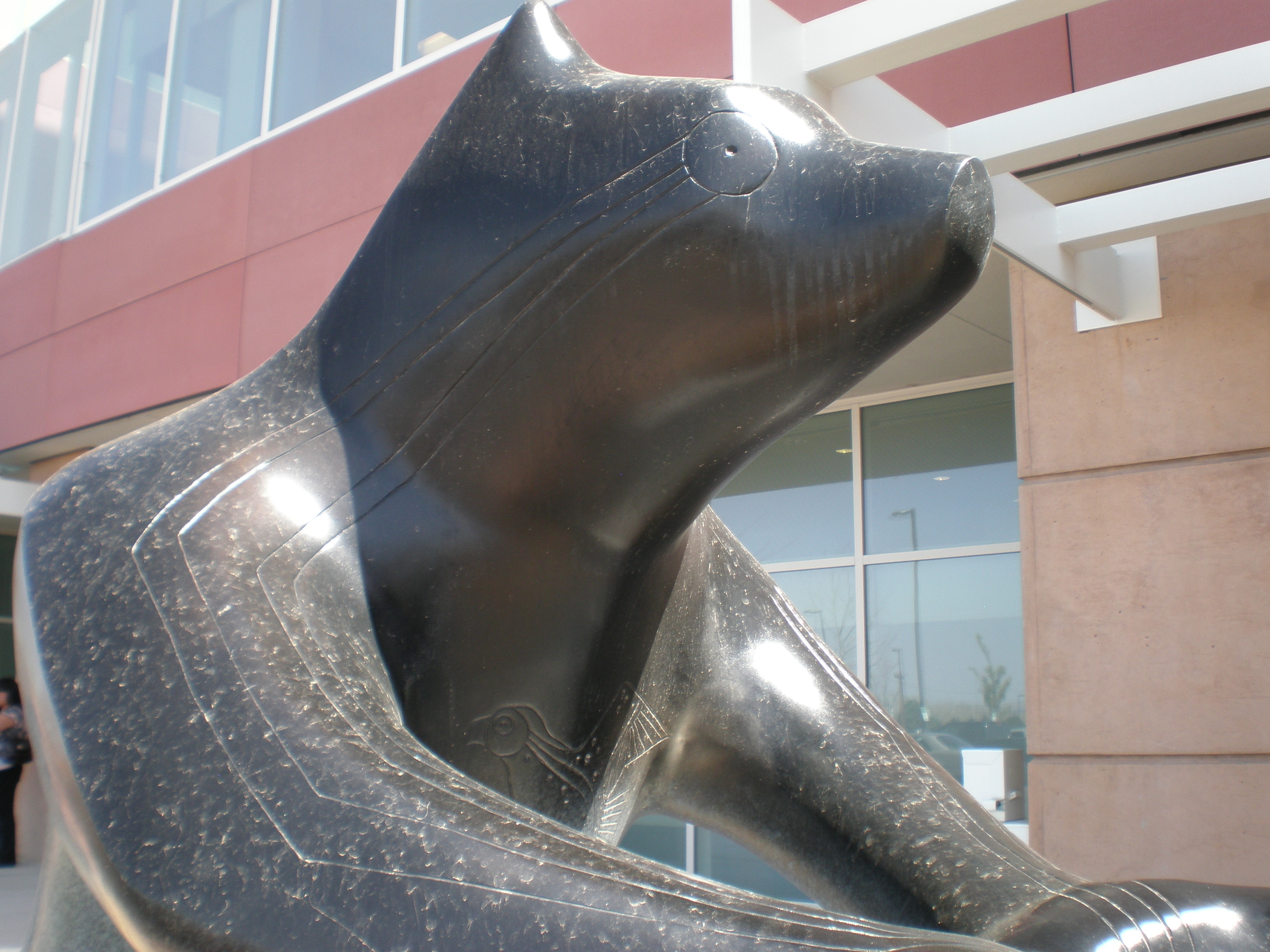
At the University of New Mexico Cancer Center in Albuquerque, where I am now being treated once a week, a healing bear greets patients as they enter the building. Marked with ancient symbols, shining black in the sun, Ethel and I stand before it every time we come to the Center. The major question in my mind at the moment, one that I cannot shake, is, why am I surviving my bout with bladder cancer while Kevin, only 28 years old, did not survive? I would have given him my life without a thought if he could still be present, thinking about butterflies that were such a constant, powerful symbol to him from the time he was a child to the day of his death when, as Ethel has written in a powerful poem not yet posted, a butterfly visited his hospital room so many stories up in the middle of the city. I understand there is no answer to such a question, and I am deeply grateful to have more years with Ethel, my children, and grandchildren, but both Ethel and I miss our son. This sonnet was written after our visit to Poet’s Walk Park on the Hudson River in New York. Ethel has also written about our experience there. After this moment we flew back home to New Mexico. Just over a year later we discovered my cancer. One of Ethel’s many photographs of the healing bear is below as a symbol of survival and strength in the face of devastating tribulation.

photograph by Ethel Mortenson Davis

31 Comments

Filed under Art, Essays, Ethel Mortenson Davis, Photography, Poetry, Thomas Davis

Sonnet 38, Kevin Michael Davis, February 16, 1982 – July 23, 2010

by Thomas Davis

He died enveloped in his mother’s arms.
The two of them alone, she felt so tired
from lack of sleep, she thought about the charm
of closing eyes and drifting off, transpired
into a dream where waiting, dread, and love
were not commingled with each ragged breath
he took. But then his breathing changed. She shoved
herself out of her chair and smelled his death.
She put her arms around him as his eyes
flew open, glancing one last time at light,
and then his breathing stopped. The cloudy skies
leaked rain. Eyes stared without the gift of sight.

Her daughter said, she brought him to the earth,
her love the bridge between his death and birth.

27 Comments

Filed under Poetry, Thomas Davis

Dragonflies, Dragons, and Her Mother’s Death

by Thomas Davis

She looked at all the red-eyed dragonflies
That hovered on the water of the pond.
Inside the small stone house, just ten years old,
But feeling like she’d lived at least two lifetimes,
She wondered how the dragonflies perceived
Her hugeness when she walked out to the pond
And stared at them, their gauze-like wings and bodies
As red as eyes that bugged out at the day.

Above her on the mountain peaks, in caves
That joined to caves through tunnels dug by dragons,
As large compared to her as she was when
She stood above the darting dragonflies,
The daily noise of dragonkind was echoing
Down rocky slopes, off cliffs too high for humans.

She wondered, looking at the dragonflies,
What she would feel if, suddenly, she grew
A dragon’s leathery wings and felt the power
The dragons felt when spewing streams of fire.

She did not look behind her where her mother
Was stiff in death, her aging face now smoothed
Of wrinkles wrought by weeks of endless pain
As life ebbed from her as she fought to keep
Herself alive so that her only daughter
Would not be left alone upon the mountain.

At last the young girl sighed. She had her chores:
She had to dig a shallow grave and find
Round stones to place upon her mother’s body.
She’d cried all day until the storm had left,
And now, inside a weariness that seemed
As heavy as the stones she’d have to find,
She had to face what was and nurse her courage.
She thought, this mountain’s home. I’m staying here.

Above the house a golden dragon drove
Its heavy wings through heavy summer air.
A rumbling echoed off the rocks and cliffs
That soared forever up into the sky.

The villagers, who lived a dozen miles away
Inside a wall of circled black, round stones,
Were terrified each time a dragon passed
Above their heads, its wing beats making thunder,
But she had always lived below the caves
And heard their moving, eating, talking noises
As they lived life the way her mother, she
Lived life, joy bubbling out of mountain stones.

Her mother would not weigh too much. Not now.
The stones she found would be much heavier.
She turned away from dragonflies and, careful
To keep her eyes away from where her mother
Looked up toward the dark stone ceiling’s thatch,
Went through the doorway’s arch outside. The chill
That night would bring was still two hours away.

She’d manage living on the mountainside,
She told herself. She’d learned her mother’s skills
At gardening and hunting game too small
For dragon’s bellies or their long, black claws.
She had a woman’s heart in spite of being young.
She went down to the shed she’d used for play
And got their spading shovel off the wall.

What should she do? She asked herself. The stones
Or digging first? She left the shed’s cold dimness
And walked down to a mound above the pool.
She wasn’t weak, she thought. She forced the blade
Into the rich, dark, mountain earth and watched
A worm slide out of sight into the ground.
She fought the tiredness in her spirit, lifted
The soil from the tiny indentation
And dug again, the rhythm of the work
A balm to memory, the single gasp
She’d heard her mother make as all her breath
Exhaled into a world she’d left unwillingly.

Night came too soon. Above her head a dragon
Flew overhead and circled, watching her.
She didn’t look at it, but kept on digging.
A moon as large as dragon fire rose red
Above the jagged peaks around the cottage.

She’d have to gather stones tomorrow morning,
She told herself. She looked back at the cottage.
In mountain air she couldn’t sleep outside,
Away from where her mother’s eyes stared sightlessly.

Do what you have to do, she told herself.
You’ll live through this. Do what you have to do.

Note: This is the beginning of a poem too long to publish on wordpress. The story was inspired by John Keats’ tale in his narrative poem, Lamia, although this poem uses blank verse rather than the rhyming couplets Keats used. To go to the next section of the epic, click on 2.

Ben Naga asked me to do an audio of the poems I have not yet put in place. I’m not sure that that is important this late in publishing the epic, but this is the audio for the first installment of the dragon epic: Dragonflies, Dragons, and Her Mother’s Death.

16 Comments

Filed under Poetry, The Dragon Epic, Thomas Davis